
The short answer
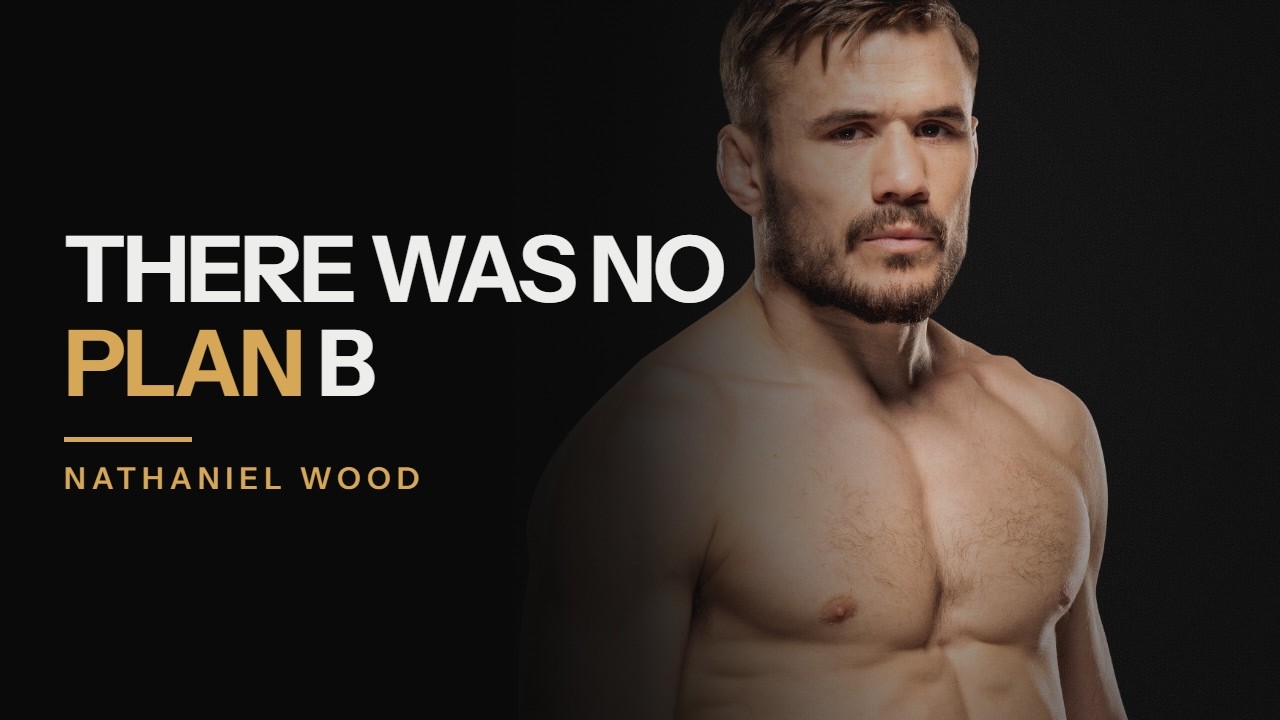
Going all in can drive you, but it is a big risk. UFC fighter Nathaniel Wood told me having no plan B pushed him to make it, because even after a loss he was back in the gym on Monday. He still would not tell young people to copy him, and now advises chasing the dream while earning from coaching on the side.
In this post
Everyone tells you to have a backup. Keep the safe job, get the trade, and only chase the thing you really want once all of that is sorted. Then you hear about someone who had nothing to fall back on and made it anyway, and you start to wonder if the sensible plan is what's keeping you stuck.
That's why this part of my chat with Nathaniel Wood on The JB Podcast stayed with me. Nathaniel is a UFC fighter and former Cage Warriors champion who started training in mixed martial arts at about 16. When I asked if he ever had that voice in his head asking whether he was going to make it, he told me he did, and that he had no plan B.
The video came out on 8 May 2026, so everything here is from around then, and his record will have moved on since. His most recent fight at that point was a split decision win over Losene Keita in London on 21 March 2026. You can watch the whole conversation on Nathaniel's guest page.
What I respect is that he didn't try to sell it to me. He told me it worked for him, and in the same breath he said he wouldn't tell young people to do it.
Should you have a plan B?
Nathaniel Wood's answer on whether you should have a plan B is that going without one drove him, but that it's a big risk and he wouldn't advise it to the younger generation.
"My thing was always about I'm never going to be able to afford a mortgage. I'm never going to be able to actually live a comfortable life if I can't make this work. And that's because I had no plan B. Now, do I say to the younger generation that's what you should do? Probably not because it's a big risk."
He was happy to take that risk himself. In his head, if fighting didn't work out, he would be on a building site for the rest of his life. He told me he had no skills on a building site, so he'd probably just be a labourer, which he hated.
His reason for going without a backup is simple. Nathaniel thinks a plan B can pull you away from the goal, because once you're earning money elsewhere, you start telling yourself you could take a couple of weeks off.
"With me, I had no other option. It was make this work, or done. ... It was go to the gym or sit at home and do nothing all day."
I think that's a fair point. A lot of people don't fail at the thing they want. They just keep a comfortable reason to stop trying.
He was also clear about the part most people leave out. Nathaniel told me he can only say all this because it worked out for him. He might never have reached the UFC, and all of it could have gone on small regional fights with no money in the bank at the end.
So my take is this. Don't copy the no plan B part. Copy what it did for him, which is that stopping was never on the table.
How did Nathaniel Wood end up with no plan B?
Nathaniel Wood ended up with no plan B because he tried the sensible route first and didn't want it. At 16 he went to college to learn carpentry, thinking he would earn a load of money and be really good at it. He told me he realised as soon as he got there that he wasn't very good at it, and a bit of labouring with his uncle settled it.
His dad then asked him what he actually wanted to do.
"The only thing I've ever wanted to do is be an athlete ... So I literally just said to my dad, I said, I'm going to be a UFC fighter."
Nathaniel's dad was training in jiu jitsu at the time, so that's where he went, and he fell in love with it. His dad wasn't so sure. Nathaniel told me he was a bit of a clean freak when he was younger and suffered with OCD, washing his hands all the time, so his dad looked at him and thought, "yeah, right, let's see". Once he was on the mats, he told me, he didn't care.
I do a bit of jiu jitsu just for fun, and I said to him that the first time you roll, it either pulls you in or makes you leave. It pulled him in. What it didn't do for a long time was pay him. He told me, "I didn't have a pot to piss in for the first nine years", and that it was only when he got to the UFC that he could bring an income in and make it his career.
Nine years is a long time to keep backing yourself.
How do you keep going after a loss?
Nathaniel Wood keeps going after a loss by going straight back to work, and he told me having no plan B took that decision away from him.
"And every time I had a loss, I was back in the gym on Monday, there was no option, there was no plan B."
Three other things he told me help explain how he has lasted.
The first is that he wants the pressure. Most of us try to get rid of nerves, and Nathaniel says they're the thing that keeps him sharp.
"The pressure is what I love. You know the fights that I've lost are the fights where I've never been nervous."
He told me those were the nights he went in too relaxed and made a mistake. That's why he loves fighting in his hometown, with his family around him and more to lose.
The second is that he enjoys the work. When I asked how he stays so consistent, his answer was "I love it". His birthday was the next day and he told me he was going to train. On the days he doesn't want to grapple, he'll lift weights or do some boxing instead, because MMA has so many parts to it.
The third is that he wants to hear how he's really doing. After a close round, the first thing he asks his corner is whether he lost it.
"For me, I don't need anyone to sugarcoat it. I need to know the honest truth, did I lose that round?"
He's the same about his wins. Nathaniel beat Jose Delgado by unanimous decision at UFC 321 on 25 October 2025, and he told me that when he watched it back, it "could have gone either way". Most people would just take the win and say nothing.
You don't have to be a fighter for any of that to apply. You need a way back after a bad week that doesn't depend on how you feel. That's what the free 30 day plan is for. It gives you something small to do each day, so the Monday after a bad week already has something in it.
Can you make a living as an MMA fighter?
Making a living as an MMA fighter is very hard below the UFC, going by what Nathaniel Wood told me about his own career. He said that when he was Cage Warriors champion he was on about 1,500 quid, and with three fights a year that comes to four and a half grand. "It's impossible," he told me. Those are his own figures, from his own career.
Getting to the UFC didn't mean he could stop thinking about money either. He told me he expected more when his new contract came up after the UFC's deal with Paramount, and that it didn't go up, which he called "a bit heartbreaking". He also said that "if I retired tomorrow, I've got to go and get a job".
He feels the same about building a name. Nathaniel told me that fighters are "left to our own devices to build our name", so he does as many podcasts, interviews and collabs as he can.
I think that's worth knowing before you burn any bridges. Reaching the thing you wanted doesn't mean you can stop asking what comes next.
What fallback does Nathaniel Wood recommend now?
The fallback Nathaniel Wood recommends now is coaching, because young fighters can earn money from the same sport they're trying to make it in. He told me this wasn't as much of an option when he started, because the sport was so much newer.
"Try and pick up a couple of clients that you can hold pads for, you know, a couple of times a week that you might earn 40 pounds for an hour or 30 pounds. But if you do five of them, that's 200 pound a week."
He said that was more than he had when he was pursuing it. He was also fair about it, and told me he isn't saying you'll automatically be great at coaching. His point was that if you've had fights and got wins, you have experience you can earn from.
To me, this is the real answer to the plan B question. A backup that drags you away from what you want is very different from one that keeps you close to it. Holding pads still keeps you in the gym.
His other advice was about people. He told me there are "a lot of sharks in this sport", and that he was lucky to have his dad as one of his coaches, because his dad could tell him straight away who not to trust. If you don't have that, he said to look for a coach who can act as a father figure and who has your best interests at heart.
Having his dad as his coach wasn't easy either. From 16 to about 21 or 22, he told me they had so many arguments, because it was coach at the gym and then dad and coach at home. Now he says they get on "like a house on fire".
Why did Nathaniel Wood move up to featherweight?
Nathaniel Wood moved up to featherweight because he doesn't believe in big weight cuts and wanted his fight camps to be about training. He told me that weighing in at 145 pounds and then walking in at 165 on fight night is cheating, but that everyone has to do it.
"I thought, you know what, I'm gonna move up a weight. I am gonna be at a disadvantage in the sense where my opponent's heavier than me, but I'm now gonna have a slight advantage that I'm gonna be faster, I'm gonna be fresher."
At the time we recorded, he told me he thought he was the smallest guy in the division, and that he had only lost one fight at 145 pounds. He was hoping to show other fighters that you don't have to kill yourself to make weight.
I see that as the same thinking as everything else he told me. He looked at what the choice would cost him, accepted it, and went with the option that let him train properly. You can find more of the fighters I've spoken to on the guests page.
One thing you can do today about your plan B
One thing you can do today about your plan B is write down what it's really for. Take a minute and be honest. Is it there to catch you if things go wrong, or is it the reason you keep taking a couple of weeks off from the thing you want?
If it's there to catch you, keep it. Nathaniel wouldn't tell a young person to throw theirs away, and neither would I.
If it has become your excuse, you still don't need to burn anything down. Pick the next day you'll go back to the thing you've been avoiding, and put it in your diary. For Nathaniel that day was Monday, even after a loss.
If you want something to keep you going after today, the 30 day plan is free. There's more like this on the blog.
What to take from this
- Ask what your plan B is really for, because Nathaniel Wood thinks a backup can talk you into taking a couple of weeks off.
- Build a fallback that keeps you close to what you want, like the pad work clients Nathaniel Wood tells young fighters to pick up.
- Set the day you go back before you need it, the way Nathaniel Wood was back in the gym on the Monday after every loss.
- Ask the people around you for the honest version, because Nathaniel Wood wants his corner to tell him if he lost the round.
- Choose people who have your best interests at heart, because Nathaniel Wood says there are a lot of sharks in his sport.
Questions people ask
Did Nathaniel Wood have a plan B?
No. Nathaniel Wood told me on The JB Podcast that he had no plan B when he chose to become a UFC fighter, and that if it failed he expected to be on a building site for the rest of his life.
Should you have a plan B?
Nathaniel Wood told me that having no plan B drove him, but that he would not tell the younger generation to do the same because it is a big risk. He now tells young fighters to earn from coaching while they chase the dream.
Who is Nathaniel Wood?
Nathaniel Wood is a UFC fighter and former Cage Warriors champion who started training in mixed martial arts at about 16. He told me on The JB Podcast, in a video published in May 2026, that he had been in the game for 16 years.
Did Nathaniel Wood beat Jose Delgado?
Yes. Nathaniel Wood beat Jose Delgado by unanimous decision at UFC 321 on 25 October 2025. He told me that when he watched it back, he thought it could have gone either way.
Why did Nathaniel Wood move up to featherweight?
Nathaniel Wood told me he moved up to featherweight because he does not believe in big weight cuts. He accepted that his opponents would be heavier in return for being faster, fresher and able to train properly in camp.
How do young MMA fighters make money?
Nathaniel Wood told me young MMA fighters can now earn by coaching and holding pads for clients, at around 30 to 40 pounds an hour by his estimate. He said coaching is also something they can fall back on.
Did this one land?
JBHost of The JB Podcast. I talk to people who have done hard things and write down what I learn. More about me
Read next
 From the conversationsHow to Perform Under Pressure: Rani Yahya on Using FearHow to perform under pressure. UFC veteran Rani Yahya told me to embrace fear, step back from your thoughts and feel grateful before you start.
 From the conversationsHow Much Do UFC Fighters Make? Jamie Pickett on the Real PayWhat do UFC fighters really take home? Former UFC fighter Jamie Pickett told me the real numbers, why he fought while broke and what changed.
 From the conversationsHow to Stay Disciplined Without Motivation: Kayla HarrisonHow to stay disciplined when you're not motivated. Kayla Harrison told me what gets her up on bad days, and how she came back from burnout.