
The short answer
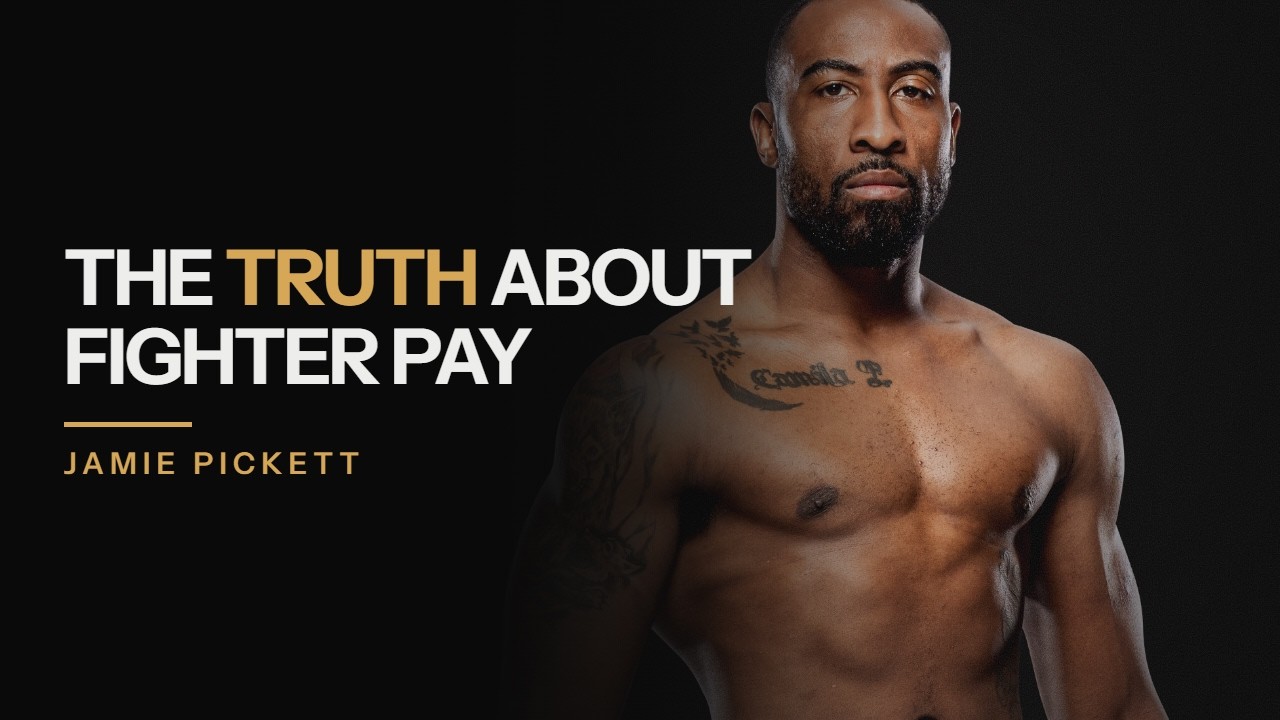
If you have ever wondered what UFC fighters really earn, Jamie Pickett told me a newcomer without a big name usually starts on $12,000 to show and $12,000 to win. After paying a manager, helpers and bills, he said a fighter can be broke again within about a month.
In this post
Most people see a UFC fighter on TV, under the lights with the cameras on him, and assume he must be set for life. I didn't know how the pay worked either, so when Jamie Pickett came on The JB Podcast, I asked him.
Jamie, known as The Night Wolf, gave me the numbers as he lived them. Then he told me what those numbers did to his body and his record.
He grew up around tobacco fields, raised by his grandparents, and he told me he took the hardest road to the UFC. He earned his contract on Dana White's Contender Series in August 2020. When I checked in November 2026, UFC.com listed him as retired with 13 wins and 11 losses, and RotoWire had his UFC record at 2 wins and 7 losses.
The episode came out in April 2026, so everything he says here is from around then. We had a problem with the video so it is audio only, and you can find it on Jamie's guest page.
The money was only part of what stuck with me. He talked about it plainly, with no self pity, and then he told me the moment that changed his life.
How much do UFC fighters make when they start?
Jamie Pickett told me a UFC fighter who comes in without a big name most times starts on what he called "12 and 12", which means $12,000 to show up and $12,000 if you win. There can be a bonus on top if you do well. Those are his own figures from his time in the UFC, not an official pay scale, and I have not checked them against a contract.
Then he told me what you actually walk away with.
"If you win the fight you're gonna leave out about 30 some thousand. Right if you lose you're gonna leave out about 26,000 and then you got to pay everybody ... you got to pay your manager. You know then you got to pay all the bills that you've accumulated not working trained for this fight."
So the number you would guess from the outside is not the number you keep. Jamie told me that once all of that is paid, within about a month you are broke again.
The pay does go up if you keep winning, he said, but not by much. A win took you from 12 to 14, then to "16,000 shows, 16,000 wins", and a new contract might get you to 18,000. That is a small rise for a job where you get kicked, punched and slammed for a living.
Why do UFC fighters take so many fights?
UFC fighters on low pay take so many fights because they need the money, and Jamie Pickett told me that was exactly his situation. People would look at his losses without looking at how quickly he was going back in.
"You look at my fights. I had like so many fights in a short amount of time. Oh, you're losing fights. I'm like, yeah. But I'm broke. I gotta fight. I can't even I can't even relax and let my body heal."
I think people should hear that before they have an opinion on a fighter's record. You see the result. You don't see the bills behind it, or the body that never got time to heal.
Jamie's corner was thin as well. He told me he had no main coach for much of his UFC career until a coach called Carlos came in about halfway through. At his first UFC fight, he said, COVID took out his kickboxing coach, so his manager had to corner him.
"I got taken down and I remember hearing the other guys coach walking them through everything he was seeing. And nobody would say anything for me."
That picture has stayed with me, a man on the ground in a UFC cage listening to the other guy get help. Jamie told me he never complained about it at the time.
What does Jamie Pickett think of UFC pay?
Jamie Pickett thinks UFC pay is badly broken, and he told me he only found out how bad once he was inside.
"It's the biggest rip off ever, you know? I didn't realize how big of a rip off it was"
I brought up the talk about Conor Benn being paid $15 million in boxing. I have not checked that figure, so take it as what we were talking about and not as fact. Jamie's point was about the people who have given their lives to MMA, like Michael Chandler and Dustin Poirier, and how the bosses get paid all this money while, as he put it, most fighters are driving Hondas with three hubcaps.
He was clear that he isn't hating on boxers for earning. "It just sucks that we can't get paid too," he told me.
When I asked what he would change for fighters, his answer was short. "Healthcare, more money." He told me he has had probably 10 or 12 concussions, maybe more, and his words were "I can't remember, but it's a lot." He also told me he had no healthcare. That is his own experience, and I have not checked what the UFC offers now.
What I respect most is that he doesn't play the victim about any of it.
"And a lot of things irritate me about how the UFC does things, whatever, but I read a contract and I signed it. So it is what it is."
I'd hold on to that, whatever job you are in. You can think a deal is unfair, say so out loud, and still own the fact that you signed it.
Why did Jamie Pickett start fighting?
Jamie Pickett started fighting because he wanted to always have food. He told me he grew up hungry, watching his brothers go hungry too, and relying on other people deciding whether they would help that day.
"I wanted to train and fight so I can always have food ... It sounds crazy, but that's literally like my whole thing."
He told me he has always loved to fight anyway, and that getting paid for it "and I can go eat wherever I want, that was like my favorite part". The attention only came later, once people started telling him he was good.
I think there's something in that for anyone who feels stuck. His reason was plain and it was his own, and that was enough to get him started. You don't need a perfect reason either. If that sounds like where you are, the free 30 day plan gives you something small to do each day, so you're not relying on how you feel that morning.
What made Jamie Pickett change his life?
Jamie Pickett changed his life after he saw his grandma cry over the trouble he kept getting into. He told me he had been fighting since he was 18 and was in and out of trouble the whole time. His turning point was, in his words, "the day my grandma was crying and crying, looking at me, telling me why don't you just do the right thing?"
There had been an earlier one. Jamie told me his best friend was killed and that he helped carry his casket, and that made him stop the street stuff. But he was still late to practice, still missing training three days out of the week and still out all night, and his grandma was tired of getting him out of jail.
"To go on to like real straight and narrow of like being disciplined and going after what I needed to do and stop making these little small bad decisions was seeing my grandma cry."
That's the line I'd underline. Most of us aren't dealing with the streets, but plenty of us have fixed the big thing and kept all the little bad habits that go with it.
Jamie also had to get away from the people he grew up with. He told me a few of his friends are dead and several are in prison, and his words were "I love them all, but they never grew up." He paid for some of their kids' school clothes and Christmas. When one friend called from prison and asked him to send the money to him instead of buying the clothes, Jamie blocked him.
You can love people and still not go where they are going. Jamie told me he didn't have good discipline at first, and that he learned it from being around people like John Salter, seeing them grind and be on time. That's the other half of walking away, because you need somebody better to stand next to.
How did Jamie Pickett deal with pressure in the UFC?
Jamie Pickett dealt with the pressure of the UFC by talking to someone about it, visualising the fight and accepting that the noise was coming, and he told me it hit him hard at first. Derek Brunson had warned him. Jamie was getting the better of him in sparring one day and feeling good about himself, and Derek told him it wouldn't be like that in the UFC, because of the crowd and because the other fighter wants it just as badly as you, if not more.
Jamie thought Derek was just annoyed. Then came his first UFC fight.
"And everybody's like yelling, it's so much pressure. Then the fighter is staring you down. He's coming at you the entire time. And I was having a hard time dealing with that"
He told me the talking helped him think about the happiest time of his life, picture himself winning and get it into his head that all of this was going to happen. "Don't worry about the crowd. Just focus on the fight." After a while, he said, he stopped caring about it. He was honest about the limits too, because everybody has a plan until they get hit.
I told Jamie I'd probably run a mile. Someone local to me once jabbed me in the head in a little spar, and all I wanted to do was hug him so he couldn't hit me as hard. So I'm not talking from inside a cage, but I think the idea works in smaller places as well. Expect the hard part, so that it doesn't shock you when it turns up.
At the time we recorded, Jamie told me he runs a cybersecurity company, and that he helps coach a fighter called Zach without taking money for it. You can find more of the fighters I've spoken to on the guests page.
One thing you can do today to stop paying for small bad decisions
One thing you can do today is name the small bad decision you kept after you fixed the big one. Jamie Pickett had stopped the criminal stuff and was still turning up late to practice. For you it might be the phone in bed, the gym session you keep skipping or the call you keep putting off.
Pick one and stop it today. Then think about who else has been paying for it, because Jamie only really moved when he saw what his mess was doing to the woman who raised him.
If you want something to keep you going after today, the 30 day plan is free. There's more like this on the blog.
What to take from this
- Work out what you keep after everyone has been paid, because Jamie Pickett told me a UFC purse goes on his manager, his helpers and the bills that built up during training.
- Read what you are signing, because Jamie Pickett told me he read his UFC contract, signed it and doesn't pretend anybody else chose it for him.
- Fix the small bad habits as well as the big ones, because Jamie Pickett had stopped the criminal stuff and was still turning up late to practice.
- Notice who else is paying for your decisions, because Jamie Pickett went all in on fighting after he saw his grandma crying over his.
- Find a plain reason that is your own, because Jamie Pickett started fighting so that he could always have food.
Questions people ask
How much do UFC fighters make when they start?
Jamie Pickett told me a UFC newcomer without a big name most times starts on 12 and 12, meaning $12,000 to show and $12,000 to win. That is his own account from his time in the UFC, not an official pay scale.
How much do UFC fighters take home after a fight?
Jamie Pickett told me a fighter on that starting deal leaves with a little over $30,000 for a win or about $26,000 for a loss. He said that money then goes on the manager, helpers and bills, and that within about a month you are broke again.
Did Jamie Pickett have healthcare in the UFC?
Jamie Pickett told me he had no healthcare during his UFC career, and that he has had probably 10 or 12 concussions, maybe more. That is his own experience, and I have not checked the UFC's current policy.
Is Jamie Pickett retired?
Yes. When I checked in November 2026, UFC.com listed Jamie Pickett as retired with 13 wins and 11 losses. The most recent fight I found was a unanimous decision loss to Eryk Anders on 2 March 2024.
What made Jamie Pickett change his life?
Jamie Pickett told me he stopped the street stuff after his best friend was killed. He said what finally made him disciplined and put all his focus on fighting was seeing his grandma cry over the trouble he kept getting into.
What does Jamie Pickett do now?
At the time we recorded, Jamie Pickett told me he runs a cybersecurity company. He also helps coach a fighter called Zach and told me he doesn't take any money for it.
Did this one land?
JBHost of The JB Podcast. I talk to people who have done hard things and write down what I learn. More about me
Read next
 From the conversationsShould You Have a Plan B? Nathaniel Wood on Going All InShould you have a plan B? UFC fighter Nathaniel Wood told me why going all in drove him, why it is risky, and the fallback he would now advise.
 From the conversationsHow to Stay Disciplined Without Motivation: Kayla HarrisonHow to stay disciplined when you're not motivated. Kayla Harrison told me what gets her up on bad days, and how she came back from burnout.
 From the conversationsHow to Train BJJ With a Full Time Job: Amber SmallridgeHow to train and compete in BJJ while working a full time job. Amber Smallridge told me her daily routine, her lifting plan and her first competition.