
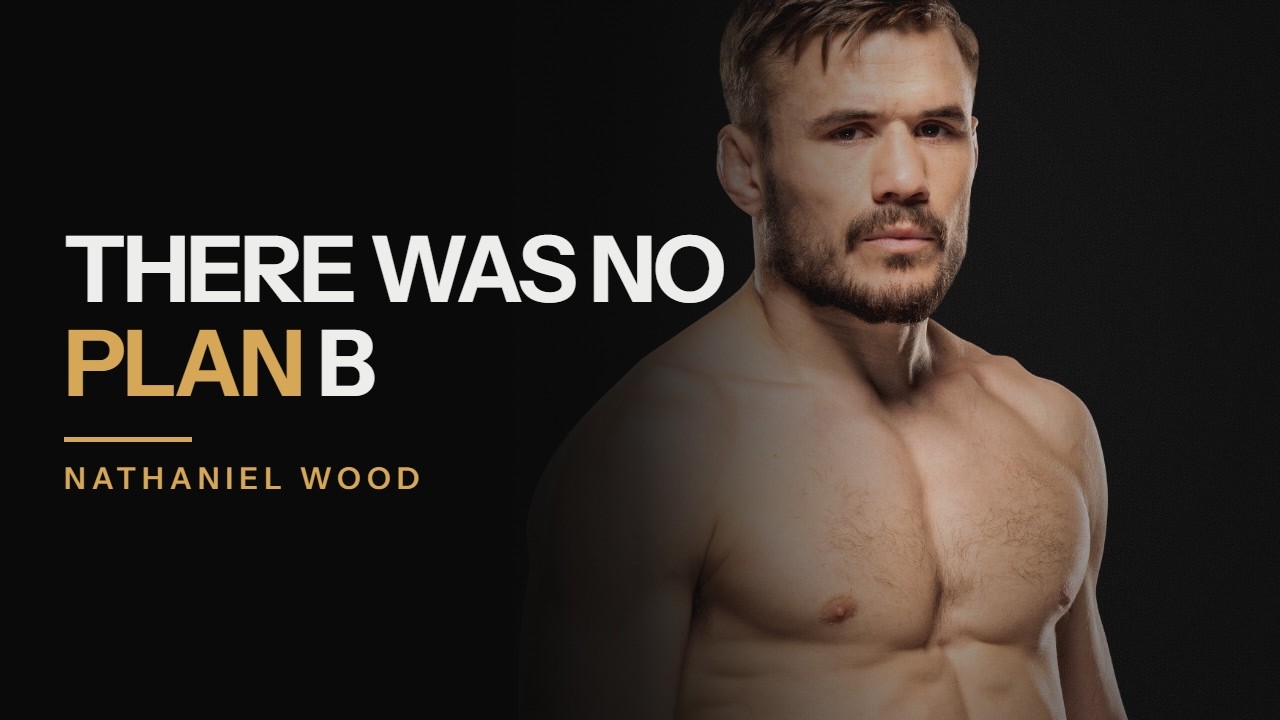
UFC Fighter Nathaniel Wood Interview | “There Was No Plan B”
Rather read it?

What this video is about
UFC Fighter Nathaniel Wood Interview | “There Was No Plan B” | The JB Podcast
UFC star Nathaniel Wood joins The JB Podcast for one of his most unfiltered interviews yet. From his early days as a failed carpenter to becoming a Cage Warriors Champion and a top UFC prospect, Nathaniel opens up about the "No Plan B" mentality that forced him to succeed.
We dive into the controversial side of MMA: the reality of "sanctioned cheating" through weight cuts, the heartbreaking gap between UFC's $7B deals and fighter pay, and why he feels the promotion doesn't give enough "air time" to rising stars.
Nathaniel also shares his unique pre-fight ritual (it involves getting slapped), his battle with OCD, and why he’s ready to take on the Top 10.
Support the Podcast: If you enjoyed this UFC interview, make sure to LIKE this video, COMMENT who you want to see Nathaniel fight next, and SUBSCRIBE for more MMA content and fighter podcasts.
Sponsored by H&H Collects: For all your One Piece and Pokémon TCG needs, check out H&H Collects!
Jump to a moment
- The "No Plan B" Mindset: From Carpenter to UFC
- Battling OCD while rolling on sweaty mats
- Why Nathaniel Wood enjoys the "Play Fight" of the Octagon
- Pre-fight Rituals: Getting slapped and "Dark Thoughts"
- The Truth about Weight Cuts: "Sanctioned Cheating"
- Living on £4,500 a year: The struggle of the regional scene
- Having his Dad as his coach: The bickering and the bond
- The $7 Billion Deal: Why UFC fighter pay hasn't changed
- "They don't give us air time": The Stardom problem
- Who’s Next? Calling out Yair Rodriguez and Top 10 opponents
- The agony of Eye Pokes and why Tom Aspinall was right
- The fighter with the most "punchable face" in the UFC
- Intro
- Turning professional at sixteen
- Whether treating it as fun takes the pressure off
- Pre-fight rituals
- Fighting in his hometown
- Doubts on the way to going professional
- Making a living on three fights a year
- His dad as his coach
- The Paramount deal, and fighter pay
- How much marketing shapes a career
- Eye pokes, and the rule around them
- Managing injuries around training
- What he remembers of that moment
Full transcript
Read the whole transcript
Made automatically from the audio, so some words will be wrong. Tap a time to hear that part.
0:00Welcome back to the JB podcast. Today I'm joined by UFC fight and the Fanya Wood for a conversation about the realities of professional fighting, the mindset behind performing at a high level and what he wants next for his future. We also covered other topics which you will see in this episode. And a quick shout out to this episode's sponsor, H&H Collects, a London based one-piece Pokemon company that trades at card shows and is active and whatnot. They can be found on Instagram at H&H collects so feel free to check them out for your one piece and Pokemon needs.
0:31Three, two, one, we are now live and the Fanny Wood, thank you for joining me. Thank you for having me mate, I appreciate you giving me the time. So for the new listeners and the people that might not know who you are, tell us a little bit about your background and your story to where you are now. So my name is Nathaniel Wood, I'm a current UFC fighter, I'm a former cage warrior as well champion and I've been training mixed martial arts since I was about 16. Pretty much have done it full time ever since I started. I didn't have a pot to piss in for the first
1:07nine years but eventually when I got to the UFC I was able to bring an income in and actually make it my career if you like. So yeah, unfortunately enough that I'm getting to do what I love for for a living and yeah, I've now been in the game for 16 years. That's crazy man, and what time flies, doesn't it? Like, still a bit quick, way too quick.
1:31What was that like for you sort of transitioning from like 16 years old, going into competing and training and fighting and sort of making it your whole life? What was that like for you? Because obviously I'm assuming you had like sternal influences that might have been like, no, and stuff like that. Yes, so with me, when I was 16, I went to learn carpentry at college, and I thought to myself, right, I'm going to be a carpenter, I'm going to earn a load of money, and I'm going to be really good at it. As soon as I got there, I realised I wasn't very good at it, and it wasn't something
2:05I wanted to do. I did a little bit of labour and work with my uncle, who is a carpenter, and is involved in the building trade. And I thought, man, this is not for me. My dad said to me, look what do you want to do you know because you're not going to be in an office like that's just not you um and i said to him i said you know the only thing i've ever wanted to do is be an athlete at the age of 16 there's not really sports that you can start and make a career path out of and UFC was a new sport and it was one of those ones where i'd seen other fighters such as the
2:37matures johnson you know that hadn't started went until they were in their 20s i think um or always 19 I think when he started. So I literally just said to my dad, I said, I'm going to be a UFC fighter. And he was changing Jiu Jitsu at the time. So he's my dad's always been into martial arts. And that was it. I went was like a doctor water, you know, I fell in love with it. I love the competition.
2:59I love the fact that it's a one on one sport. And it's only me that can get in there and actually do the job. You know, I'm not relying on 11 aside or anything like that. And yeah, from the from the The moment I stepped in the gym, or before I even stepped in the gym, I said to my dad, I'm going to do this for a living.
3:14And he kind of looked at me and thought, yeah, right, let's see, are you actually like, you know, rolling around with sweaty men in jujitsu because I was a little bit off a clean freak when I was younger. You know, I suffered with OCD. My OCD is now nothing to do with cleanliness or anything like that. But when I was younger, I used to be very clean, you know, I had to wash my hands all the time.
3:38I went to jujitsu, it was just normal, you know, I had a clean after, but while I was on the mats, you know, I didn't care. I was in the zone and I had that adrenaline rush every time I was sparring and yeah, I loved it. So here we are now. I mean, with jujitsu, when you've got someone on top of you is absolutely sweating and they're sweat stripping in your eyes and face, it's either going to make or break your head.
4:03It's one of them ones. You're like, oh, I don't know. I love it personally. It's a sport of like not sport really that I do. I just do it for a bit of fun, but it's When I first ever went it was the adrenaline, you know, like yes, there's a buzz there That's I don't know either pulls you in or it makes you leave it's one of the two Do you know I mean when you start rolling around you go? I ever really love this or it's not for me You know straight away. I think Yeah, well growing up for me. I was very boisterous like I like to play fighting, you know, I like WWE and all of that sort of stuff.
4:36I was always getting in trouble at school because there was always like just messing about play fighting. I was never getting into fights, but you know, I was a very active child. I never could sit still. And I remember at school I had to have a bit of paper stuck to my table to sit in a fan, you'll keep his hands and feature himself because I kept putting people in like WWE moves and stuff like But yeah, for me, Jiu Jitsu, MMA, every part of it is a play fight.
5:05You know, at the end of the day, it's a sport, there's a referee, there's a ruleset, you know, you haven't got to worry about someone hitting you from behind or someone stabbing you or something like this. So to me, even though it's a very extreme form of play fighting, it's all a play fight, you know, it's all pretend if you like, because it's not a real life scenario.
5:25So for me, it's good fun. You know, I'm one of these, I don't think many fighters actually enjoy fighting. I think they like the camps. But when they get in the actual octagon, it's like, well, I just need to get this job done and finished with me. I love it. I'm in there and I'm in the zone and I'm, you know, it's an enjoyable thing for me.
5:48Of course I have adrenaline. Of course I have nerves. I'm not saying I don't. But for me in the moment, maybe like a skydiver, you know, I'm guessing that when When they jump out of the plane, that's the bit that's the most fun. For me, it's the same. I do know a lot of flights is where they don't quite want to actually be in there. They want to just get the job done and get out.
6:07For me, I'm quite happy. As my record says, I'm quite happy to go to the decision. Is that, do you think because you see it as fun, that does alleviate a lot of the pressure for you, but also keeps you focused in your flight counts because it doesn't feel like, I mean, obviously every fight camp has its moments, right? But it doesn't feel like you have to be there.
6:30You want to be there because you're enjoying it, because it's fun. Yeah, I definitely think that enjoying it makes it that much easier. And I think, you know, they're saying a happy fight as a dangerous fighter. Right. I always think that if you're enjoying it, you're always going to do better. I want to do better. For me, I'm the type of fighter where I go to the gym and my coach, Brad.
6:52He's always moaning at me because I don't want to do technique. I just want to spot, you know, I just want to go live. I just want to get going. I can't quite sit still. You know, I think I've not been diagnosed with ADHD, but I must have it. You know, I get to the gym. I don't want to do technique. I want to go. I want to drill.
7:09I want to go live. Let's do the hard beat. You know, I want to get a sweat on. I want to get the heart pumping. Yeah, I mean, obviously stepping into an octagon in front of 20,000 people, get your heart going, you know, that definitely gives you that buzz. And it's very hard to explain to people, but it's a very addictive feeling. And yeah, at the moment, I'm hooked on it.
7:33And when the day comes where I don't enjoy it anymore, I'd like to be able to think that I can just hang my gloves up and say, that's me done, you know. How do you like, do you have any sort of, I don't want to say like pre-fight rituals, like you wear lucky pants or anything like that? but do you have any pre-fight rituals before you're walking out, when you're in the back room, to manage that stress?
7:56Because I've spoke to a few people who do some breathing techniques, other people, they just suck it in as like, I'm so lucky to be here, and then that's how they manage to enjoy it, and they alleviate that stress. Like what's your sort of go to? So with me backstage, I have to be very angry and shouty. You know, you'll never come in and see me chilled and relaxed.
8:19I'm like a don't know, some crack head that's just come out of a fire, you know, I'm all over the place. I can't stop moving. In my head I need to psych myself up and I think of a lot of dark thoughts about my opponent because for me, I personally fight better when I go in there with the intentions that I hate my opponent, you know, I want to break him or I want to hurt him. So for me, I have to kind of think of some dark thoughts to do that, obviously are going to jimmy up. What another little ritual I do is just before I step into
8:51the octagon I get my coach to slap me a few times and again that's all part of it. I want to be angry when I get in there. I want to be going in and looking at my opponent with the intentions of I want to hurt you. Of course when it's over I don't actually want him to be hurt. Before my fight I always pray for my opponent's safety as well as mine and yeah I just feel like I fight better when in my head it's like life or death. You know, I've got to do this to protect my family, that sort of thing. I just feel like I, yeah, perform better. I think when I'm too relaxed, that's when I can
9:28make mistakes and, you know, obviously it calls problems for myself. Do you prefer, is there more pressure as well to perform sort of locally within the UK or abroad? Like, which one do you prefer? Is there more pressure locally or is it all the same? Like, How do you deal with that? I definitely would say fighting in my hometown there is more pressure and the pressure is what I love. You know the fights that I've lost are the fights where I've never been nervous where I've gone in and you know maybe it was that there wasn't really that many people there that I knew personally it was like oh you know this is just a show somewhere where no one's
10:05even heard of and I've gone in there so relaxed and I make a mistake. So for me that's why I need to be properly in the zone and for me there's no bare feeling in fighting in your hometown. For me it is an absolute buzz you know. Travelling the world is cool but when it's fight week you know you're chewing the zone you've got weight cuts all of these outside things that you have to do that people don't necessarily see so it's not like I can enjoy the country you know it's not like I can go somewhere and enjoy the scenery all on thinking about eating food when I'm cutting weight. So yeah, for me, hometown, having my
10:42family around me and keeping everything as normal as possible, day to day life, is how I think life like the best. What's your opinion on weight cuts? Do you think they're good or do you think people should love so you do them? But do you think they're good in the long run or do you believe like people should fight and compete at their more natural weight? Because I see there's obviously a lot of opinions around the subject, so it's just because he's yours.
11:08So I've moved up a weight, so I'm the smallest guy I think in the Fevaway division because I don't believe in weight kind. Unfortunately, it's one of those things where you do have to do it because everyone does it. The problem is, is it's a extension cheating. It really is. What you're doing is you're saying, right, I'm going to weigh in at, let's say, 145 pounds. means I'm a hundred and forty-five pound fighter but on fight I'm gonna walk in at hundred and sixty-five pounds you know that is cheating but unfortunately it's just something that everyone has to do it and no one's ever an advantage so what
11:44I decided is I thought you know what I'm gonna move up a weight I am gonna be at a disadvantage in the sense where my opponent's heavier than me but I'm now gonna have a slight advantage that I'm gonna be faster I'm gonna be fresher You know, my flight camp's no longer about killing myself to make way. It's now about actually training like an athlete should and having my opponent in my mind the whole flight camp and not, you know, how many calories can I have today?
12:11So I personally think that going up away was the best thing for me. Of course other people are going to argue that and I think, you know, weight cut in such an ancient method has been around so long that there's so many fires and coaches that are just going to refuse to move up away and refuse to kind of believe in this new method of not killing yourself to make way. And I'm hoping that maybe I can prove to people that you can.
12:35I've only lost one fire at £145. So, you know, I think I'm proof that it's not always about cutting ridiculous amounts of weight. Pulling it back a little bit. Did you ever have like bouts on your road towards obviously being a paid professional fighter in the UFC. What was that like? Like that internal dialogue, am I going to make it? Am I not like, how did you manage all that stuff?
13:03Or did you even have it, always you're so convinced that this is what I'm going to be? So I did have it. My thing was always about I'm never going to be able to afford a mortgage. I'm never going to be able to actually live a comfortable life if I can't make this work. And that's because I had no plan B. Now, do I say to the younger generation that's what you should do?
13:23probably not because it's a big risk. So for me, I was personally open and happy to go for that risk. I thought to myself, if this doesn't work, I will be on a building site for the rest of my life. And I had no skillset on a building site. So in other words, I'd probably just be a laborer, which I hated, didn't like it one bit. So I did in my head just say that, you know, this is all you have.
13:51And every time I had a loss, I was back in the gym on Monday, there was no option, there was no plan B. I do think that if people have a plan B, sometimes that can stir you away from the drink. It's like, okay, maybe I could take a couple of weeks off because I am earning money elsewhere, or I am doing this. With me, I had no other option.
14:12It was make this work, or done. If I didn't train, there was nothing else I had to do. I didn't have a job, I didn't have a nine to five that I go to, I didn't have any money so that it wasn't like take a week off and you can go on holiday for the week. It was go to the gym or sit at home and do nothing all day.
14:32So I do feel that me having that one option was better for me. And I can say that now because it's worked out for me, but I'm not necessarily gonna say to the others that that's something you should do because it is very risky. You know, maybe I had never got to the UFC. maybe I never got money in my bank and you know it could have just been all spent on just regional scene fights and I'm not saying that's a bad thing if you enjoy it but it's a bad thing if you're fighting with the intentions of having this as a career off because I was
15:09only in when I was caged with all champion I think about 1500 quid. Do you have three fights a year were you going to live on four and a half grand? It's impossible. So yeah Yeah, for me personally, I define that having only one option is what kind of drove me to make sure my dreams are accomplished. What other pieces of advice would you give to young people that are looking to pursue this as a career in a dream?
15:38What things should they maybe avoid, even managers or clubs that they go to? I don't know like the vibes, any advice for them? If any of you have your head screwed on with the people that you surround yourself with, because there are a lot of sharks in this sport, I am very fortunate that with my dad and my dad's one of my coaches that, you know, he could protect me from anyone.
16:05You know, he could tell me straight away, don't trust this guy. And I knew that I had that father in my life, Bob, father, figure, guided me. So if someone doesn't have a dad that's involved in the sport, I definitely say try and look at finding a coach who can act as a father figure, who does have your best interests at heart. And, you know, of course you never really know what someone's intentions are, but I think you'd be a good judge of character if you think to yourself is this person really there for me.
16:35And now this wasn't really an option as much back in the day because the sport was so much newer. But now you can earn money, obviously coaching, PT, and holding pads. So what I say to the younger fighters now is, look, if you're trying to do this full climb, try and pick up a couple of clients that you can hold pads for, you know, a couple of times a week that you might earn 40 pounds for an hour or 30 pounds.
17:02But if you do five of them, that's 200 pound a week. You know, I say 100 pound a month. That was more than what I had when I was pursuing it. And it is something that you can fall back on now, you know, coaching MMA. is a career path in essence. You know, do you get sued a lot more popular now? Of course, I'm not sitting here saying that you're going to be great at it, but if you're an MMA fighter and you've got in there and you've been able to actually have fights and got wins under your belt, then I'm sure you do have the experience to be able to coach
17:32people and earn money from it. So that's definitely the fallback that I would say to for it is now to have. And what's your relationship with like your dad, like with coach and dad? How do they does that ever cause an issue a little bit? Because obviously sometimes it's dad, sometimes it's coach or is it environment that's like, OK, this is coach mode and this is when I started from this day, the age of 16 to probably that 21 22.
18:03Oh, mate, we had so many arguments where it was coach at the gym and then we got home and it was like, dad coach at the same time and you messed up in the session and not because I don't, but you know when you just bicker and maybe I like, I was hard work probably for my dad because I would be sitting there thinking it's me dad and he's like, no, I'm your coach right now.
18:25Listen to me as your coach. So we did have a lot of routes. I think my mum will say like there was a lot of times where we've come home and the big dad's lost his temper and I'm sitting there sulking and it was hard work but now we get on like a house on fire you know me and my dad are best of friends you know he's still coaches me now not as much because he's a lot older but there's still times where we might disagree with something but we can work better with each other now so my dad's quite like if he's showing me something can he can see it's not quite working for me Alice move on you know let's
18:58not sit there and focus too much on it. So, yeah, like right now, the last, since I've been in the UFC, we're the best of friends, you know, he's the best coach I could ask for and the best dad I could ask for. Is your dad a black belt? He's a black belt in judo, black belt in karate. He was I think a purple bow in jujitsu and then he retired from, you know, doing it himself. He's at Muay Thai fights. He's He's just the kind of traditional martial artist, you know, from the age of 16, I think, himself.
19:29He did all of these sports just for pure passion, you know. He didn't, when he started, there was no MMA. And he just loves it, you know, he's done, I think. Kendo, the sword fighting, you know, he's done fencing, he's done everything you can think of. But that's been there and done it, you know. He was kind of just a passionate martial artist. And yeah, I think for him it was obviously a very proud moment getting me into the sport.
19:56I know now that he kind of hates it because he has to see some cut weight and actually make money from the sport and he can see that obviously there's a lot of people in the sport that do use us because at the end of the day all we are to, for example, promotions is entertainment. And I think now that that gets a little bit harder, I'm no longer fighting in a final in the regional scene, it's now a proper job.
20:22And I do think that now he's quite happy if I retire. So I was just going to say like, when you were growing up, and yeah, that sort of coaching and dad dynamic going on, he was probably like, I'm going to mess you up one day, dad, and he was probably like, yeah, of course you will. So I know what I'm doing, of course you will. That's crazy, man.
20:41I'm sure it was, I mean, sorry, I've just lost my trial of football. when you were saying about the pay structure and the pay, like what is your view on the UFC's pay with the paramount deal and all that going on at the moment? Cause I've spoke to a few people who say they're happy with it and some people that are not so happy with it. I've been very happy with my paycheck up until this paramount deal and now mine's kind of not gone like at all.
21:10And I'm a bit like now I'm seeing what other fighters are getting. example when Connor Ben obviously came around and got 15 million, it's heartbreaking. I'm not earning enough to live a good yearly wage, but if I retired tomorrow, I've got to go and get a job at the top echelon of the sport. If you compare it to other sports, when you're getting paid nowhere near as much, I do feel that if the company's just sold for $7 billion in Paramount, I was sitting thinking all my new contracts coming up, you know, I'm going to get some more and it didn't go up, not even in the slightest. So that was a bit heartbreaking for me. But at the same,
21:49in the same breath, where else am I going to go? You know, you obviously have a few other promotions that do pay some flights as well, but the UFC is really the monopoly. You know, they are the main promotion. If you don't really fight in UFC, you're not really going to make that much money in the sport. As I say, there are some small small there's some promotions out there, you know, PFL, 1FC, but they don't pay all their fighters good money, you know, they might have their selected for you. But yeah, you know, unfortunately, there isn't really many other options you can get. So it's one of those where it's long people leave it.
22:27Do you think part of that also comes down to like the marketing of the fighter slightly? So, So, you know, like a Conor McGregor overseas paid ridiculous amounts because he's Conor McGregor. Do you feel like there's a slight onus on the fighter to be more of a superstar or do you feel like the UFC? It's hard, the dynamics hard, because I see people fighting in the UFC and I'm like, they're going to be a big thing. And then they don't fight for a year. And you're like, yeah, do you know what I mean? So there's that balance of if they want to build people up, they need to be on more cards I suppose.
23:03But yeah, so I completely agree. Obviously the US getting to the US is one thing, but coming to superstar and the US is another thing. My own personal, my own personal all process is I'm already getting the opportunity to build that stardom power. So for example, you know, I've been sent for ages, I've deserved a ranked opponent, I'm still not getting a ranked opponent. You know, for example, the London card that just went I was on the prelims when guys that were making their debut was on the main card.
23:33And the other thing that sometimes, you know, just winds me up a little bit is that I don't feel like the UFC give us any Instagram time. You know, of course, when you have the UFC events, it's like, oh, the main event and the homemade events get the promotion, they get the Instagrams and that sort of stuff. But, you know, if I was to do a video now hitting pads tag the UFC in it, they're not going to share it.
23:54They're not going to give me any sort of air time. So I do feel like we're kind of left to our own devices to build our name. So I can only go with what I'm given. I can only fight the people that I've got in front of me. If I'm not on the main card and there's not as many eyes on me, I can only go and wear the matchmakers, put me on the card.
24:15So I do my best that I can. I try and collab with as many people as I can. And I try and, for example, now do as many podcasts and interviews as I can. If you're not getting the opportunities to build that kind of start and it's hard to actually do it, you need those opportunities. You need the UFC Instagram accounts and the TikTok accounts. You need them to give you that platform.
24:40Otherwise, you're like any other fighter. You just got to start up. So how are you going about that? I don't know. Maybe it's one of those where if you get certain amount of wins in the UFC, they do give you some form of emotional work, you know, I'm not saying I need to get paid for it. I'd love to be able to go on there and do more interviews and get my name out there more and do more collabs, but you know, I can only do what I've got. I've got a marketing idea for you when we finish by the way, I'll let you know what it is. I think it's a cool idea. I won't share it now because you might
25:14not want to do it. Who do you want next? Who do you want to fight next? So I'm going to just say that boring answer that everyone hates but anyone ranked above me you know it's got to be said if i have it my way i think i deserve someone in the top 10 i don't even think i need to have someone in the top 15 um i know that's a big ask you know i'm not ranked at the moment so for example they'll say oh you can get 15 14th me versus pitbull me versus armpico if you said to me now i get to decide i'd like y'all would regas or brian ortega someone that's been in the sport through on
25:51time who I think is holding up the division. I feel like they camp in their little spot in the rankings and I don't feel like they deserve it there. I'd rather avoid people like Josh Emmett because he's on like four losses on the short now or something like that and I just feel that that's that. I don't want to be just that one guy that kind of beating as well as everyone else.
26:11I want the guys that have got wins on their records. So yeah, for me if you said pick someone, I'll say Yaward Riggas. That's a big good fight. That's a great match up. Of course, people are going to say, oh, that's too much of an ask. I've watched fighters, and I know what I struggle with, and I know what I can deal well with. I think Yaward Riggas is a fighter that I could quite comfortably go in there and be. You study type then, yeah, or just watch?
26:43I do. Yes. I watch it in my division. I mean, if you said, do you watch fights as a fan? If I'm honest, I don't. I just don't have the time. I'm so busy doing everything else. And as I said, cheer earlier, I can't sit still, you know, I'll watch one fight and I'm itching and I've got to do something. So yeah, I'll go and study tape on people in my division. And that's purely just on a business slash work mindset, you know, how do I beat this guy and so on.
27:12I may stay up of course for someone like a Conor McGregor, you know, a real massive, massive fight, but very rarely will you see me sitting there watching a UFC God. What do you think about eye pokes? Like, what's the rule there? How do you see them? Do you think this one and done, like, should be pointing to him? Yeah, it can be so hard. They suck.
27:35getting poked in the eye, I can promise you now is a very, very painful feeling. And to then have to continue to fight, it's, you know, if you poke me in the eye properly, I'm not going to recover from that eye poke within five minutes. Of course, I could continue to fight, but that's now going to be causing me an issue. Unfortunately, I don't think there is really anything you can do about it. I know people have said about designing the glove in different ways, but I think eventually it's just going to end up being a boxing glove.
28:06I think the eye pokes do happen. We've seen it before with, there's a female fighter where through the head he caught in the eye with a toe, and it was completely legal. Like she got away, like she was allowed to do that, and the fight got stopped, but you saw on the tape the toe just straight the eye. You can't, how do you stop that? Did you put shoes on as well?
28:28You know, it's just one of those unfortunate things. But of course, I think that fighters deliberately poking their fingers out, etc. Maybe one morning and then it's penalised, you know, you can't be doing this all day and risking punking someone in the eye. On a like, Sir O'Gahn really, you know, against big toss. Yeah, yeah, I feel sorry for Tom. I thought like he's getting, you know, a lot of stick and it wasn't even him that committed the foul, you know. No one knows whether he could have continued, whether he couldn't but I think it's the amount of finger that when in his eye, he was totally in
29:06his right to say mate I can't fight with this. The fact that he's gone away and actually had like eye surgery and these eyes lasered you know come on give the guy a break no one seems to be given to organa a hard time about it so yeah I mean it sucks for Tom I've had like just gentle in the eye in training and I'm sitting there for five minutes thinking what the hell just happened.
29:31You know, it's a very delicate thing in the eye. So unless you're the one that's got the eye poke, no one will ever know how bad it is. How do you manage your injuries with training? Obviously, like if you've got, you're going to get niggles and have problems, right? Like it's not like every day you turn up to training, you're 100% fit. Where's the balance there? Like how does is your camp manager. So I personally try and nip them in the bud straight away. So as soon as I feel what I would say in the analogy that I would use is if you had a car and you have a little
30:04orange warning like come up, it's better to get it fixed and looked straight away before it turns into something more serious. I have a current injury at the moment, my shoulder's bad for my last flight but it's one of those where it's like the pain's not inspuciating, it's about six or seven out of 10, but it just is consistent. So it's very kind of irritating. You know, I want to just go and train freely and unfortunately I can't, but in the same breath, I don't want to just do nothing. So I'm waiting on my results now. I'm hoping that they don't turn around and say, well, you have to do his rest. I'm hoping that they say you can do some, you know, formal activity,
30:43try and strengthen it and build it up. But yeah, the main thing I would do is just try and get everything early before it comes a big problem. With your sort of training camps and even just your normal day-to-day training, how are you so consistent with that? Just I love it. I think that's it. I love it. So, of course, after a fight, it's nice to have a week off, especially when you've got some injuries for the fire and you've been beating up for a few rounds. You deserve it. Have a few days off.
31:14But if you said to me now what tomorrow you're doing nothing, I'll be bored. It's my birthday tomorrow and I'm going to train it. I want to train. That's what I enjoy doing. So of course the good thing with MMA as well is there's so much to it. So there might be days where I don't want to do any grappling. I'll go and lift some weights. I'll go and do boxing.
31:34I'll go and do something else. Whereas if you was, let's say a boxer doing the same thing all the time could get very born. We're lucky that we can cross train. I could do grappling, I could do wrestling, I could do boxing, kickboxing, stretching, strength conditioning, anything that I do will benefit me in the long run. When you're in the ring competing, do you know when you've lost around?
32:00Like do you know when you've lost around? And when you go back to that corner, what's that conversation like with yourself and also from your team? So there's a lot of rounds where I go, that's close. And the first thing I'll say to my corner is did I lose that round? For me, I don't need anyone to sugarcoat it. I need to know the honest truth, did I lose that round?
32:20So if I've lost the first two, the third one I need to go out and try and get that win. My coaches are very honest with me, so they'll sometimes say to me, like, could go either way mate, but anyway, let's get you straight back in the next round. This is what I want you to do and so on. So for me, it's easier to know roughly where I'm at.
32:38Unfortunately, in this sport, you know, it can't get overturned left, right and center. The judges, if they make the wrong or right decision, it's kind of there, that's it. You know, I've been in fights before where I felt like I won, I've lost. And there's been fights where I won, and I was like, well, I could have lost that. It was very close. You know, me versus Jose de Gardo was a very close fight.
33:01In the fight, I did feel that I'd done enough. I felt like I was the aggressor the whole fight. in the fight, I feel like he started to deteriorate, which I felt gave me that kind of presence of I'm winning this fight. Watching it back, I'm like, could have gone either way. You know, I'm going to be as honest as open as I can. I'm not going to sit down and say I watched it and went, yeah, I smashed that fight. I definitely won. I'm like, could have gone either way.
33:26Unfortunately for me, the judges gave it to me. But we got to remember is each judge is in in a different corner. So one judge is going to be able to see stuff better than another judge. I was watching your, um, what with Josh Reed? Yeah. Mate, that is a slow quest. How, what was that like for you in there at that moment? Like, do you remember much about it? Do you know what I mean? Like, yeah.
33:52I was going to be crazy. So for that fight, it was they promoted it as England vs Wales. There was a lot of his guys there, there was a lot of my guys there. And as soon as he rocked me with the first punch, I remember thinking, I'll tell you like this. So in my head, I was thinking, do I shoot for a takedown? And pride got to me, I was like, no, I'm not going to be shooting for a takedown. I'm not letting my crowd down. So I just bit down on my gum shield, made sure that I survived. Then, yeah, obviously got the wind myself. So that was a very special
34:28fight that was one to remember and yeah you know I think it was because there was so much buzz about being England vs Wales it was such a good feeling when I felt like I represented and actually came away with that win so yeah you know that one will stay with me forever. I've just got one more question for you which I think is a funny question I'm going to ask anyways, who do you think in the UFC has the most punchable face? What person is the most? I don't think he's in the UFC anymore. But as it Sam, Alvi, the smile, the smiley guy? I think I know who you're on about. Yes. I don't think
35:10you've seen him all but he's probably the nicest guy in the world. But he's always walking around with a massive smile, just grinning with his teeth out and I'm like, no one should be smiling that much. So yes, I don't know if you can see, but it's, I mean, it's great. That green is just, that's something, but I'm sure he's a lovely user, but yeah, that's my old like, man, I wanna give it a good punch.
35:41When can people expect to roughly see you back competing? When would you like to be competing? Well ideally I like to think that with my scam results they should be here in a minute and need to chase them up because they're actually taking longer than expected. I'm hoping that they turn around and say it's a couple of weeks worth of rehab and then it's back to normal.
36:03I don't quite know how it all exactly works. So for me I'd like to have an eight week flight campaign and I'd deal with world, couple of weeks to get my shoulder better. I'd say 12 weeks time. I'd like to think that in the next month I could have a fight booked. So yeah, it would be nice to be on that Serbia card. You know, Serbia I think is in 12 weeks or 11 weeks. And it's obviously the UFC making their debut there. So I think that'd be quite a historical moment for me. I was on the Paris card, the first ever Paris in the UFC, that was cool. So yeah, that would be quite a cool
36:38experience I think it's not too fast a couple of hours away I can take the girls with me and no jet lag. Yeah cool I've already appreciated coming on and chatting with me is there anything you want to add or are you happy? No just thank you for having me and you know I hope obviously your listeners think that I'm a nice bloke and then I'll go and yeah you know if you can tune in to my next fight I'll be much appreciated. Yeah no I appreciate you coming on man I'll end it here and I'll chat with you for two minutes off camera that's cool with
37:08off recording. Yeah, yeah, yeah, that's it. Super other. Thank you for coming on. Thank you, man.
Watch next
 Klaudia Sygula On Becoming A Fighter, Handling Pressure And Getting To The UFC
 Joseph P. Holmes “UglymanJoe” Interview | MMA Fighting, Training & Mindset
 UFC Fighter Rani Yahya on Performing Under Pressure | MMA Mindset & Mental Toughness
 Jamie Pickett UFC Interview | The Reality of MMA, Fighter Mindset & UFC Pay
 Kayla Harrison: The UFC, Olympic Gold, and Motherhood
 Kayla Hracho on MMA, Mental Health, and Accountability.
 Steven 'Hillbilly Hammer' Hill on Competing in Bellator
 Steven 'Hillbilly Hammer' Hill on Signing with Bellator
 Jaz Lopez on Muay Thai, Fighting and Building a Fitness App
 Sophia Cassella on BJJ, Training and Competing