
The short answer
A goal feels too big when you look at all of it at once, and that is what keeps you overthinking instead of starting. The way out is to take one small step every day and only look at the next one. Small steps repeated are what change your life, far more than one massive effort.
In this post
It's Sunday night and you've decided this is the week. You sit down with a notebook and start writing out everything you'd need to do to get where you want to be. The list reaches the bottom of the page and you're not even halfway through. You look at it for a minute, feel your chest tighten, and close the notebook. Monday comes and goes, and the notebook stays shut.
If that sounds like you, nothing is wrong with you. You looked at the whole thing at once, and the whole thing is always too much.
"Have you ever had a goal or a dream that felt so big that instead of taking action, you just felt stuck?"
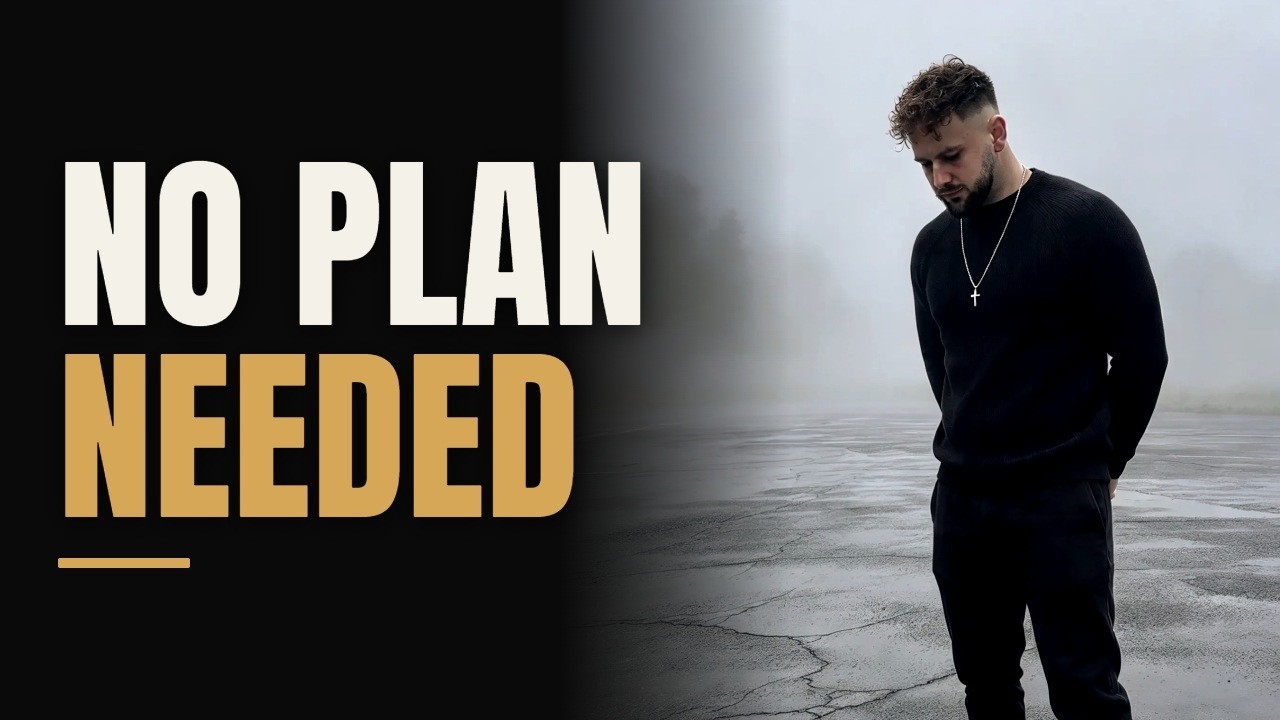
I made a short video about this, because it's a feeling I think a lot of people know. They want it. They've thought about it for months. They just can't get themselves to begin. Below I'll go through why a big goal makes you freeze, the one rule I use to get moving, what a small step really looks like, and what to do on the days you don't feel like it.
Why does a big goal make you freeze?
A big goal makes you freeze because you try to hold every part of it in your head at the same time. You think about the money, the time, the people you'd have to tell, the things you don't know how to do yet, and all the ways it could go wrong. No single one of those is the problem. The pile is the problem.
"This is the trap of overthinking. The more you think about the long road ahead, the more impossible it seems."
Then the doubt arrives. You start asking whether you're the kind of person who can do this at all. Before you know it another day has passed and nothing has changed, and that makes the goal feel even further away tomorrow.
Thinking about a goal feels like work, which is why this trap is so easy to fall into. You can spend a whole evening planning and feel like you did something. But a plan you never start is only a nicer way of standing still. I've written more about that loop in my piece on how to stop overthinking.
What is the one small step rule?
The one small step rule is to take one step towards your goal every day, and to only look at that step. You stop asking how you'll get to the end and you only ask what you're going to do next.
"you don't need to have it all figured out, you just need to start."
In the video I use the picture of a mountain, because that's what a big goal feels like when you're standing at the bottom of it.
"Instead of looking at the entire mountain in front of you, just focus on where you're going to place your foot next."
Nobody climbs a mountain by staring at the top. They look at the ground in front of them and put a foot down, then they do it again. The top looks after itself if you keep doing that.
This takes the weight off straight away. You can't do a year of work today, but you can do one small thing today. Once you've done it, tomorrow's step is usually obvious, because you can see a little further from where you're now standing.
What does one small step look like?
One small step is something you could finish today in a few minutes, without needing to feel ready. If it needs a free weekend, a new piece of kit or a burst of motivation, it's too big, so cut it down again.
Here's what that looks like for a few common goals:
- You want to get fit. Put your trainers by the door tonight and walk for ten minutes tomorrow morning.
- You want a new job. Open your CV and rewrite one line of it.
- You want to start a business. Write down the one thing you'd sell, and tell one person about it.
- You want to sort your money out. Open your banking app and write down the real number.
- You want to write something. Open a blank page and write one sentence, even a bad one.
None of those will change your life by itself, and that's the point. They're too small to be scary, so you'll do them. And once you've done one, you're no longer a person who is thinking about it. You're a person who has started.
"It's not about doing something massive once, it's about doing something small every day."
The big push is what most people wait for. They want the perfect Monday, the clear diary and the right mood. Then they go hard for three days, burn out and stop. A small step every day is boring next to that, but it's the one that's still going a month later. If you want a way to make starting even easier, I've written about the 2 minute rule, which works well alongside this.
What about the days you do not feel like it?
On the days you don't feel like it, you still take a step, you just make it a smaller one. Those days are coming, so it helps to expect them. Some mornings you'll wake up and want none of it.
"Some days you'll feel motivated and take three steps forward, other days you'll barely manage one, and that's okay, because progress, no matter how small, is still progress."
A bad day doesn't have to be a zero. If the plan was a ten minute walk and you can only face getting to the end of the road and back, do that. If the plan was an hour on the business and you've got nothing left, write one line. You kept the chain going, and you can do more tomorrow.
What breaks people is the day they do nothing, tell themselves they've failed, and use that as the reason to stop altogether. One small step on a bad day is how you avoid that.
Staying the same costs more than changing
Staying the same costs you more than changing does, even though changing is the one that feels uncomfortable today. That's the part I'd ask you to sit with for a second.
"The pain of staying the same will always be worse than the temporary discomfort of making a change."
The discomfort of a first step is real, but it's short. It lasts as long as the step does. The feeling of knowing you wanted something and never moved on it doesn't go away like that. It sits there, and it gets a bit heavier each year.
So when you're deciding whether to bother today, don't compare the step with doing nothing. Compare it with how you'll feel in a year if nothing has changed. Then think about where you could be in a month, in six months or in a year if you'd taken one small step every single day.
One thing to do today to take the first step
The one thing to do today is pick a single small step and take it before you go to bed. Don't write the full plan and don't wait for Monday.
"What is one small step you can take today, not tomorrow, not next week, right now?"
Say it out loud or write it down, and make it small enough that you can't talk yourself out of it. Then do it, and decide tomorrow's step once it's done.
You can watch the full video and others like it on the videos page. And if you'd like the next step handed to you each morning, the free 30 day plan does exactly that: you tell it what you want to change and it gives you one small thing to do each day.
What to take from this
- You do not need the whole plan before you start, you only need to know your next step.
- Take one small step towards your goal every day, even on the days you can barely manage it.
- Make the step small enough that you could do it today in a few minutes.
- A small thing done every day beats a massive thing done once.
- Staying the same hurts for longer than the short discomfort of changing does.
Questions people ask
How do I take the first step towards a big goal?
To take the first step towards a big goal, stop looking at the whole thing and choose one small action you can do today. It should be small enough to finish in a few minutes, like writing one line or making one call.
Why do I overthink instead of starting?
You overthink instead of starting because you are trying to see the whole road before you move. The more you think about everything that needs doing, the more impossible it feels, so doing nothing starts to feel safer.
What is the one small step rule?
The one small step rule is to take one step towards your goal every day and only focus on the next one. You do not need to see the whole path, because each step shows you the one after it.
What if I only manage a tiny step some days?
A tiny step still counts. Some days you will take three steps and other days you will barely manage one, and both move you forward. The only thing that stops your progress is taking no step at all.
How long does it take for small steps to change your life?
Small steps start to add up within weeks, because one step turns into two and you build momentum. There is no fixed number of days, but a month of one small step a day leaves you somewhere very different from a month of thinking about it.
Did this one land?
JBHost of The JB Podcast. I talk to people who have done hard things and write down what I learn. More about me
Read next
 From the conversationsHow to Control Nerves Under Pressure: Olympian Harry HepworthHow to control nerves under pressure. Olympic medallist Harry Hepworth told me how he uses his nerves and moves on fast after a bad routine.
 From the videosHow to Change Your Life Fast: 6 Simple Steps to Start TodayHow to change your life fast without a perfect plan or endless motivation. My six simple steps, from knowing what you don't want to taking messy action.
 From the videosWhy Does My Life Feel Boring? How to Make Ordinary Days BetterWhy does my life feel boring? Most of life is ordinary days. How I would stop comparing, break the autopilot and make everyday moments better.