
The short answer
The 2 minute rule is a simple way to stop procrastinating. If a task takes less than two minutes, do it now. If it is bigger, commit to just two minutes of it, because starting is the hard part and action creates momentum. After the two minutes, either keep going or stop and come back tomorrow, but keep showing up.
In this post
There's an email sitting in your inbox that you've been avoiding for a week. Replying would probably take you ninety seconds. But every time you open your inbox you see it, you feel that little drop in your stomach, and you close it again. Then you pick up your phone, and twenty minutes later you've watched a load of random videos and the email is still there.
That's procrastination. The task isn't hard. Your brain has just decided it is, and now anything else feels easier.
"You sit there thinking, ugh, this is going to take forever or I don't feel motivated enough and suddenly doing literally anything else feels easier."
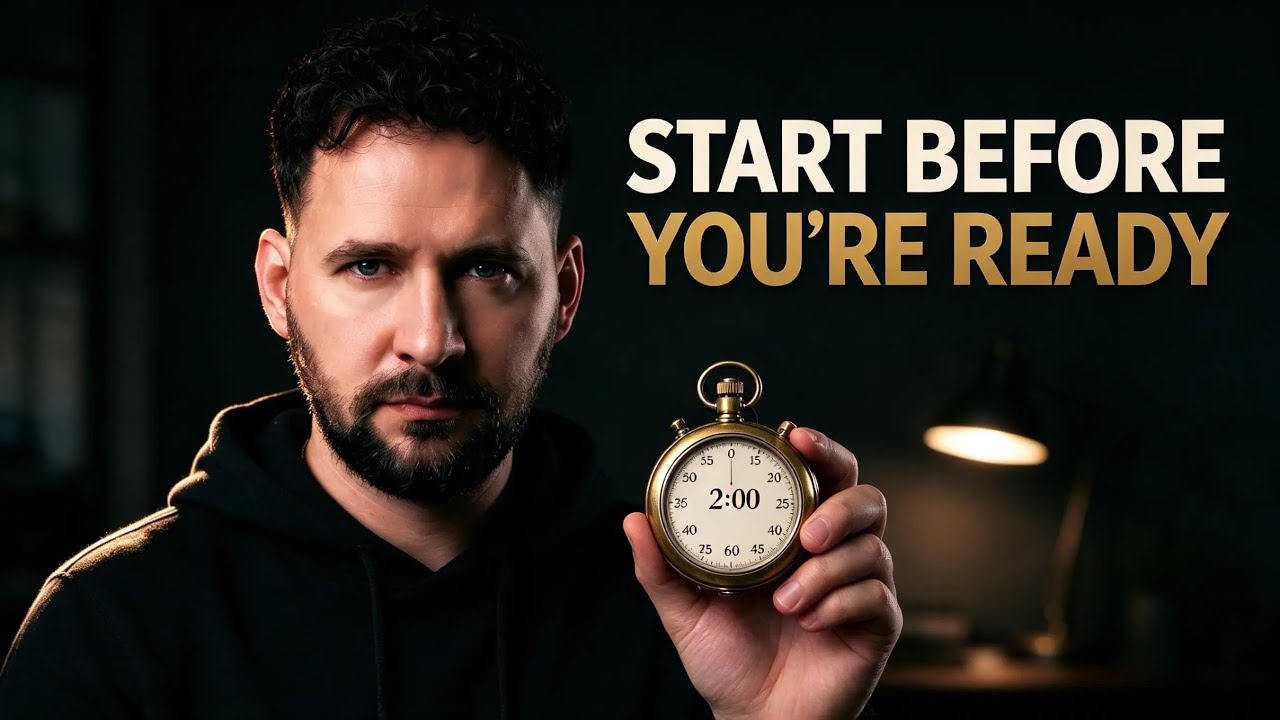
I made a short video on the fix for this, and it's ridiculously simple. It's called the 2 minute rule. Below I'll go through what the rule is, where it comes from, what it looks like on a normal day, the mistakes people make with it, and what to do once your two minutes are up.
What is the 2 minute rule?
The 2 minute rule says that if a task takes less than two minutes, you do it straight away. You don't put it on a list and you don't tell yourself you'll do it later. You just do it.
"If a task takes less than two minutes, do it immediately. No excuses. Need to send a quick email? Boom. Done."
The rule has a second half, and it's the part I think matters more. For the bigger jobs, the ones that won't fit into two minutes, you don't promise yourself you'll finish them. You promise to work on them for two minutes. Writing a book, getting ready for a presentation or sorting out your desk all count.
"The rule says just commit to working on it for two minutes."
So you open your laptop and write one sentence. You make the first slide. You tidy one corner of the desk. That's it. You're not signing up for a whole afternoon of it, you're signing up for two minutes.
Where does the 2 minute rule come from?
The 2 minute rule comes from David Allen's book Getting Things Done. In his version, when you're deciding what to do with something and the next action on it would take less than two minutes, you do it there and then. His reasoning is that it would take you longer to put it on a list and come back to look at it again later than it would to just get it done.
James Clear took the idea and adapted it for habits in his book Atomic Habits. Clear's version is that when you start a new habit, it should take less than two minutes to do. On his website he credits Allen's rule as the starting point, and his examples include turning reading before bed into reading one page, and turning running three miles into putting your running shoes on. His point is that the two minutes are about getting good at showing up.
So there are really two versions of the same rule. Allen's is about clearing small jobs before they pile up. Clear's is about making the start of something bigger so small that you can't talk yourself out of it. In my video I use both, and I think you need both.
What does the 2 minute rule look like on a normal day?
The 2 minute rule on a normal day looks like a load of tiny jobs getting done the moment you notice them, instead of being carried round in your head. These are the kinds of things that really do take less than two minutes:
- Replying to the text you've been ignoring.
- Making your bed.
- Putting your plate in the dishwasher instead of leaving it on the side.
- Hanging the wet towel up instead of dropping it on the bedroom floor.
- Answering the group chat with a yes or a no.
- Adding the thing you've just run out of to the shopping list.
- Opening the letter that has been on the kitchen side for three days.
- Putting your gym bag by the front door the night before.
None of those are a big deal on their own. The problem is that when you leave them all, they turn into a constant background noise of stuff you haven't done. Doing them as they come up clears that noise, and as I said in the video, these small wins add up faster than you'd think.
The bigger tasks are where the second half of the rule earns its keep. Say it's Sunday afternoon and you've got a presentation at work on Thursday that you've been dreading all week. You don't need to build the whole thing today. You open the laptop, make the title slide and jot down three things you want to say. That's two minutes, and suddenly the mountain doesn't look so high any more.
It works the same way for most things you put off. If you want to start running, your two minutes is getting your trainers on and stepping out of the front door. If your room is a mess, it's clearing one surface. If it's your CV, it's opening the file and fixing one line. If it's the awkward message you need to send someone, it's writing the first sentence, even if you don't send it yet.
Why does starting for two minutes work?
Starting for two minutes works because the hardest part of most tasks is the start, and the 2 minute rule makes the start tiny. Once you've started, the task usually turns out to be a lot less painful than your brain told you it would be.
"Once you start you'll often find yourself wanting to keep going. Why? Because action creates momentum."
The way I put it in the video, it's like pushing a boulder downhill. It's hard at first, but once it starts rolling it's almost unstoppable.
It also flips round the way most of us wait to feel ready. We tell ourselves we'll do it when we're in the mood, or when we've got a proper chunk of time, or when we feel a bit more motivated. That moment hardly ever turns up on its own.
"Motivation doesn't come first, action does. That's why waiting until you feel ready is a recipe for staying stuck."
There's a quieter reason it works too. Every time you say you'll do two minutes and then you actually do them, you've kept a promise to yourself. It's a tiny promise, but they add up.
"When you consistently prove to yourself that you can take action, even in tiny increments, you build trust in your ability to follow through."
If you'd like something daily to practise this on, the free 30 day plan sets out small, clear steps for each day.
What are the most common mistakes with the 2 minute rule?
The most common mistake with the 2 minute rule is using it to stay busy while the big task sits there untouched. You clear your inbox, reply to every message, tidy the kitchen and sort the post, and by the end of the day you feel really productive. But the one thing that mattered, the presentation or the application or the hard conversation, still hasn't been touched. That's still putting it off, it just looks tidier. The fix is to do your two minutes on the big thing first, before any of the small jobs.
The second mistake is lying to yourself about what takes two minutes. "I'll just quickly sort out the wardrobe" turns into an hour on a Tuesday night, and the thing you were meant to be doing gets pushed back again. If a job can't really be done in two minutes, it isn't a two minute job. Either give it a two minute start, or put it in your diary for a proper slot.
The third mistake is letting every small thing interrupt you. The rule isn't a reason to drop what you're doing every time your phone buzzes. If you're in the middle of something that needs your full attention, let the small stuff wait, and deal with it all in one go when you've finished.
The fourth mistake is feeling like you failed if you stop after two minutes. Some days you'll do your two minutes and want to stop, and that's allowed. You still showed up, and showing up is the habit you're building.
The last one is making the first step too big. If your two minutes quietly turns into "a full workout" or "a whole chapter", it gets scary again and you're back to putting it off. Keep the first step so small it almost feels silly.
What should you do after the two minutes are up?
After the two minutes are up, you get to choose. You can keep going, or you can stop and come back tomorrow. Both are fine. The only wrong answer is not coming back.
If you're rolling, keep going. That's the momentum doing its job, so don't stop just because the timer says you can.
If you stop, write down the very next step before you close the laptop or put the kit away. Something like "write the second paragraph" or "do the warm up and one set". That way tomorrow's two minutes need no thinking at all, and you're not sat there trying to remember where you left off.
It also helps to hang your two minutes on something you already do every day. Do it straight after you put the kettle on in the morning, or as soon as you get in from work. Same time, same place, so it stops being a decision.
Once the two minutes feel easy, let it grow slowly. Two minutes can become five, and five can become ten. Don't rush it, because the point was never the size of the session.
"Progress doesn't come from grand gestures, it comes from small, consistent actions."
And if you miss a day, don't use it as a reason to give up on the whole thing. Do your two minutes the next day. If you're someone who keeps falling off and starting again from scratch, my conversation with Valentina Lequeux on how to stop starting over is worth reading next.
One thing to do today to stop procrastinating
The one thing to do today to stop procrastinating is pick the task you've been avoiding the longest and give it two minutes before you go to bed. If it's a two minute job, like that email, just do it and get it off your mind. If it's bigger, do the first two minutes and stop if you want to.
Then write down your next tiny step, so tomorrow you know exactly where to start. That's all it takes to break the loop for one day, and one day is how it starts.
If your head talks you out of things before you even begin, I've also written about how to stop overthinking. You can watch the full video and others like it on the videos page, and if you want one small step a day for the next month, the free 30 day plan is there.
What to take from this
- If a job takes less than two minutes, like replying to a text or putting your plate in the dishwasher, do it straight away.
- For a bigger task, commit to just two minutes of it, like opening the document and writing one sentence.
- Be honest about what really takes two minutes, because a quick job that turns into an hour is not a two minute job.
- Do your two minutes on the big task first, so the small jobs do not become a tidier way of putting it off.
- When the two minutes are up, either keep going or stop, but write down the very next step so tomorrow is easy to start.
Questions people ask
What is the 2 minute rule?
The 2 minute rule says that if a task takes less than two minutes, you do it straight away instead of putting it off. For bigger tasks, you commit to working on them for just two minutes, which makes starting far easier.
Who came up with the 2 minute rule?
The 2 minute rule comes from David Allen's book Getting Things Done, where any next action that takes less than two minutes gets done there and then. James Clear later adapted it for habits in Atomic Habits, saying a new habit should take less than two minutes to do.
Does the 2 minute rule help with procrastination?
The 2 minute rule helps with procrastination because it shrinks the hardest part of any task, which is starting. Once you start, you will often want to keep going, and every time you follow through you trust yourself a bit more.
What should you do after the two minutes are up?
After the two minutes are up, you choose. Keep going if you are rolling, or stop and write down the very next step so that starting again tomorrow takes no thought at all.
What if a task takes longer than two minutes?
If a task takes longer than two minutes, the 2 minute rule does not mean finishing it now. Do the first two minutes of it, or give it a set time in your diary, so it stops sitting in your head.
Is it okay to stop after two minutes?
Stopping after two minutes is fine with the 2 minute rule, as long as you come back tomorrow. The point is getting good at showing up, and a small start you repeat is worth more than a big session you never begin.
Did this one land?
JBHost of The JB Podcast. I talk to people who have done hard things and write down what I learn. More about me
Read next
 From the videosHow to Change Your Life Fast: 6 Simple Steps to Start TodayHow to change your life fast without a perfect plan or endless motivation. My six simple steps, from knowing what you don't want to taking messy action.
 From the conversationsHow to Control Nerves Under Pressure: Olympian Harry HepworthHow to control nerves under pressure. Olympic medallist Harry Hepworth told me how he uses his nerves and moves on fast after a bad routine.
 From the videosHow to Take the First Step When a Goal Feels Too BigHow to take the first step when a goal feels too big: why overthinking keeps you stuck, what one small step a day looks like and how to start today.