
Stefi Cohen on Powerlifting, World Records and Training Under Pressure
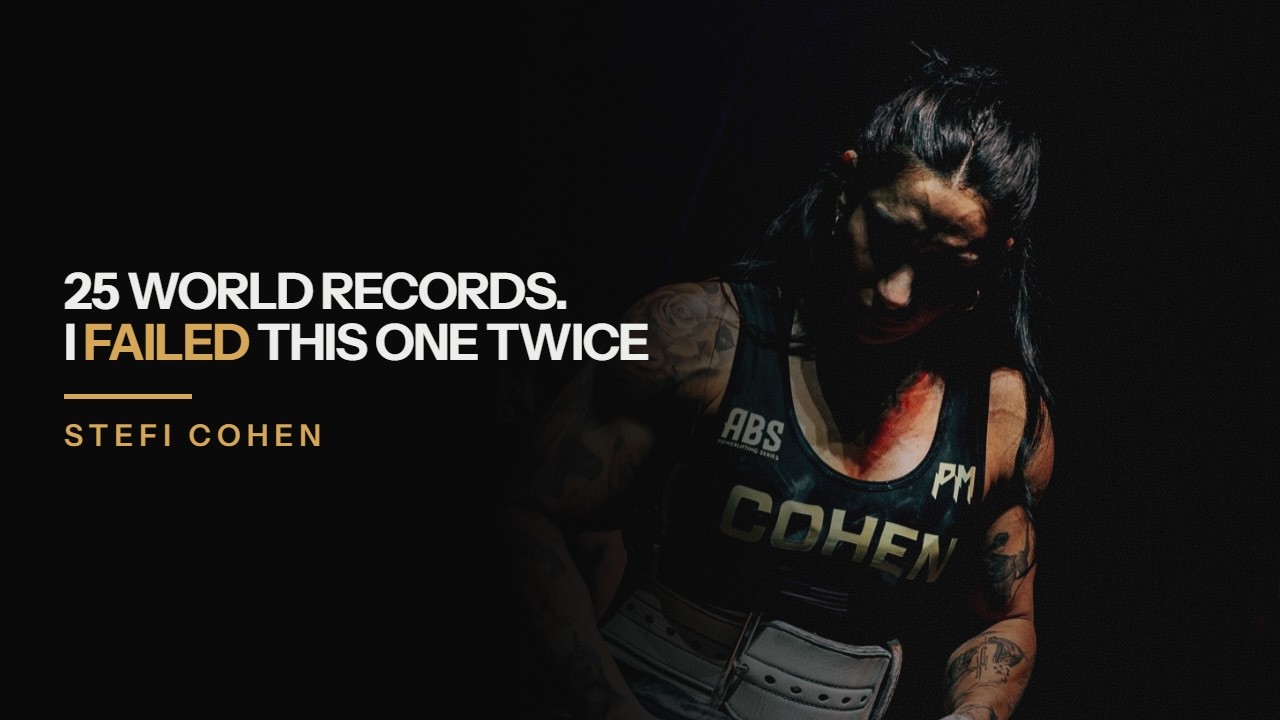
What this video is about
In this episode, Stefi Cohen talks about her powerlifting career, what chasing world records does to the way you train, and the mental side of competing at that level.
She covers how many hours the work actually takes, what she has learned coaching other people rather than only herself, and how she thinks about training when the numbers stop moving.
About Stefi Stefi Cohen is a powerlifter and physical therapist who has held multiple all-time world records in her weight class and co-founded Hybrid Performance Method. She holds a doctorate in physical therapy and has since competed in boxing.
Jump to a moment
Full transcript
Read the whole transcript
Made automatically from the audio, so some words will be wrong. Tap a time to hear that part.
0:19yeah i'm good thank you hello yeah i think the signal's a little bit off okay hopefully that'll be about yeah i think this is better there we go stephanie thank you for joining me today pleasure thanks for having me um really appreciate your time i know i emailed you at the last minute to see if we was going ahead so that's my bad on that on that one and for so for those people that don't know who you are um which i know you've got a lot of following so i know a lot of people do know who you are um but for those listeners that don't um
0:53could you just tell us about your background and kind of what you do yep so i am known for being a power lifter i've been competing for about five years um i'm also a physiotherapist so i graduated a couple years ago from the university of miami and i'm the co-owner of hybrid performance method which is an online business uh to give people affordable and accessible training programs that are focused on strength that's why and obviously you've got um 25 world records as well which is a little kudos there i mean um i've got none so i'm a little bit jealous um how do you prepare for your your
1:38world record attempts what your mindset and everything for that do you know you're going to do it in advance or is it just i'm going to turn up and get this way up both you know it you never know you know some training sessions hold on my cap is wrecking something one second dude please please please please stop that come here we saved this cat this guy from the streets the other day ah bless i love cats very cute she's like three weeks old ah man baby um but yeah it depends you know there's there's training cycles that are a little bit more focused um everything's kind of pre-planned and
2:24going according to the plan and then there's training cycles where you have no idea kind of what's going to happen your expectations are set low and you end up surprising yourself so you know the training for a world record sometimes it's something that you foresee that can happen and you have confidence in yourself and you think that you know it's definitely going to go down in a competition but it's not always the case you know it's just really consistent dedicated training for long periods of time which world record do you think has been your toughest one to achieve uh i would say my first deadlift world record because there was
3:01so much hype behind it there was so much talk about it since it's my it's my strongest lift it's what people know me for the most so i think like the anticipation and expectation and fear of uh you know not performing a certain level or not doing what people expect and hope to see and letting people down you know that was tough from a mental aspect going into a meet and just overthinking everything kind of thing um and i think i actually i actually failed that world record deadlift a couple times so in two different meets you know one time it didn't come off the ground and one time i missed it on grip
3:40so it was you're in your head when you have a missed deadlift attempt or you or you know now that i'm doing boxing i can imagine like if you if you if you lose on a fight you know then that gets on your head for the next one and it's it's it's a challenging kind of like mental game they have to play play with yourself like trying to forget about it and not give not giving the losses important so that you can start kind of like with a plain canvas on the next match or in the next competition so the first time i broke that deadlift world record it was was exciting because
4:11like it you work so hard right in preparation for a competition you can be training for anywhere from two months to six months you know where where all you do is focus all day long on this competition everything you do from the moment you wake up to the moment you you go to sleep is thinking about this competition this world record so having gone through all of that cutting weight that's another like huge aspect of aspect of competitive power lifting you know i i walk around at 130 pounds and i cut down to 118 119 those are those are big cuts so just going through that whole process
4:47cutting weight staying focused you know saying no to distractions sacrificing stuff like trips and bachelorette parties of my friends and and bad food and whatnot you go through that twice with the expectation that you're gonna achieve something and then you don't end up doing it that's why i feel like the third time when i uh when i attempted the world record and i actually got it was so exciting because it was a long time coming you know i have some pictures from that and you can see like i've never shown that much excitement on like on a platform i started crying i just like couldn't hold it together you know
5:21it's just it's exciting and it's oh my god it's just so much i don't think people people who don't compete don't understand that you know to people's it's just a deadlift it's just lifting you're just lifting weights but they don't understand like that the behind the scenes suffering to get there and how and dude with with powerlifting training going to the gym is if you're comp if you're competitive and you're getting paid to do that you're not like enjoying your time all the time it's not like it's not like playing soccer it's not like playing baseball where you're playing you're with people you're messing around you know there's so much
5:56things that you can do with powerlifting you just walk in you train most likely or help you you're gonna have a shitty day and you walk out of the gym so it is special when you're able to like break through barriers for yourself barriers that people place upon you you know uh stereotypes like all these six people doing things that are humanly impossible that people haven't done in the past that's what a world record is so it is super exciting i mean the the key line there as well is that people don't see what's going on behind the doors with that hard hard sort of work ethic
6:33there's plenty of sayings out there but people are like you know it took me 10 years to be an overnight success and it's kind of like the same thing like it took me you know 5 000 hours in the gym to to lift that weight or or however many hours and people don't see those five thousand hours they just see that one lift and they're if you fail they're quick to jump on your back not knowing about the hard work and obviously when you succeed it's always some people will you know go oh yeah it was a lucky lift or whatever and it's like no i worked my
7:02ass off for this you just didn't see it absolutely it's like the uh iceberg effect yeah yeah really good yeah really good very very true people love to write you off when you obviously like when i miss that when i miss lifts and competition people are like see like she you know she's not good or uh or the opposite actually to make my point within this argument it's like oh yeah powerlifting comes easy to her of course anyone can be a world record holding lifter bar lifter if if they had you know all the time in the world to train and they didn't have kids and they didn't have responsibilities
7:35it's like nah dude i made my life so to set it up so that i could train full-time you think like one day i just decided i'm gonna drop everything and train full-time no like you you there's a period of time where you're that we are all the same we're all juggling responsibilities stressors you know and school and finances we all go through that no professional athlete ever just gets handed an opportunity so yeah always it always cracks me up when people say oh i could have done that and it's like well if you could have you would have but you didn't so so you know don't and then and then the
8:12excuses come and everything like that and then people think someone else has it easy and it's like no it's not the case like we're all born pretty much the same you know some people have it a little bit more difficult in life because of backgrounds and everything like that but fundamentally we get the same amount of hours in the day to work on our craft and become you know the best of what we do exactly how did you get over that um mental sort of barrier when you stepped up for that third lift because i know it's hard to explain when when we talk about mentality it's always
8:44hard because you are wired the way you're wired but how did you kind of overcome that did you just step there and think whatever i'm going for it and it's gonna lift or was it like i'm gonna fail here no look i mean there's there's people who can do that right they just don't think much about kind of the mental strategy but in a sport that's a matter of like it's inches you know it's a matter of inches like you it's positions it's like preparation you're in your mental your mental uh state for the competition has a lot to do with your with the outcome if you ask any professional athlete how
9:22person percentage-wise how much do you think uh mindset plays a role in your sport they're all gonna tell you like it's like 80 90 and then you're gonna ask them okay so like what you what do you do to work on your mental game and they say well i mean nothing at most like visualization is what people say so after i missed that second time in that competition i really i had that realization that it's like i realized that my mental game is not strong i'm breaking down during training you know if i have a bad time about that if i have a bad training day i am i started developing developing
9:58this shitty attitude where i would just like be pissed off and like cut my work out in half and leave kind of thing um and that's when i realized i'm like damn i think like this is a a really important hole in my training that i need to fill you know like i can't just expect that one day i'm gonna my mental game is gonna be better my mental strength is gonna be better so i heard a sports psychologist and we worked for together for like eight months leading into the next competition i took some time off from meets to um really develop this develop a strategy
10:34and if to me it was game changing like i and even just even outside of the sport but i'll stick to talking about this meet um and how and how how the mental strength training improved my performance so like one of the strata you're asking like how did you shake off the the previous meet not going your way and then having to step on the platform and essentially attempt the same way so one of the main strategies that we utilized was visualizing a negative outcome so a lot of people when they use visualization techniques they focus on the positives it's like visualize yourself on the top of the hill on top of the mountain you
11:11know first first place podium visualize yourself a gold medal on your neck or like visualize yourself making a lift or punching someone on the face and winning the winning the the match whatever but most of our folk are training focused on visualizing negative outcomes and essentially planning for how you're going to respond so i would literally do this mental exercise it's almost every session where you know i'm doing everything i'm getting ready putting my singlet on i feel good um i'm walking towards the bar i have chalk on my hands i feel the grip the bar is cold like with a lot of detail um and then i may i i miss the lift
11:52i miss the lift at the bottom i wasn't strong enough i missed a lift at mid-range i wasn't my grip was failing i missed the lift whatever my technique was off and you go through all these scenarios and you think about how you're going to react you know you have three attempts in deadlift and in in powerlifting for each lift so how you respond to a missed lift it impacts your performance tremendously because it's only nine attempts total so it just was a lot of um it wasn't even like so sports psychology is not like traditional therapy psychology where you're like talking about your feelings you don't
12:28really talk about your feelings you talk about strategies and tools you know if x then y kind of thing and that was one of the biggest ones and it was kind of paired with managing with uh trying to not place that much importance on expectations from other people you know understanding that why why are you doing this why are you so affected by what people think of you how do you think that's going to change your life just like a lot of introspection um and a lot of just tools for different kind of scenarios and it paid off i actually went on that meet i missed my first squat a weight that i
13:04had done for like six six or seven reps it was an a light attempt a light opening attempt um and for the first time ever in my entire power lifting career i was able to like wrap the bar back up and like laugh i was like [ __ ] it like [ __ ] this wait like i can obviously do this right and hayden and everyone in my corner was like oh my god like they're freaking out they're like oh my god you missed that squad like i can't believe it i'm like yo chill like it's all good like i don't care i have two attempts more
13:35you know and just that change it that shift in mindset was so powerful because it allowed me to continue the competition as if i hadn't failed in the first place so when when you're lifting obviously like heavy weights there must take a toll on your on your joints and your physique to an ex to an extent how do you kind of what do you do for injury management um i mean that's a that's a topic that we could talk for like five hours but you know for the most part injury management injury risk reduction injury prevention which is not really a thing uh it's a it's a really kind of like
14:15gray zone because even the most the smartest most talented athletes with the smartest people in their corner even they get hurt right so you have to understand that when you're doing something professionally when you're when you're pushing your body to its limits you're bound to you're bound to get hurt you know if you're flying too close to the sun you're gonna burn some feathers it's just part of the game and it's a matter of understanding that they will happen and that you are beating your body up to the ground and it's not healthy but that's that's you're aware of that you're aware of what you're doing and how it's
14:50affecting your body and when you do get hurt if you do get hurt then it's just you see it as like one more piece in in the game so as far as for me for injury management you know the most important thing in powerlifting at least is load management so how are you you know are you counting your tonnage do you know how much weight you're moving in a particular week how are you progressing that throughout the weeks in a particular block is it you know at a pace that's allowing you to recover or is it at a pace that's breaking you down and not allowing you
15:23to make progress and all of that you know is so individualized and it changes every year as well every every person has a different rate of progress every person has a different rate of recovery from one particular session some people respond really well to volume some people respond really well to high percentage you know high effort lifts uh and for me like it's impossible for me to tell you just like one thing that i've done because my body has changed so much from year to year and i've had to adapt to everything but the main thing is load management and intelligent progressive overload and outside of that like man
16:04anything you do like acupuncture dry needling uh cryotherapy sauna contrast therapy normatex theragans like all of those are tools that acutely make you feel better um or even like sometimes even placebo like there's no kind of physiological changes occurring in your body when you use those um so even if it's just it's just pretty much numbing down the pain for for a short period of time to allow you to beat your body up harder yeah so it's man it's i've gotten hurt so many times over the last five years so many times uh that i just in powerlifting i've at least i i accept that at no point during a
16:50training cycle i'm gonna be training pain-free i just accept that it's it's impossible it's impossible talk to anyone who's been competing for more than three years at a high level in powerlifting or in any iron sport crossfit a strong man bodybuilding ask at mfa if they ever train fully into your ear fully pain free yeah i think with that and that mentality because obviously when when you try and dissect it a little bit it's like you're training at an extreme level to compete at an extreme level which is doing extreme things to your body which in turn if you're going to push your body as much as you're going to you have to
17:31accept that there's going to be some some breaks and tears and and issues that are going to come along and that you need that mindset to go yeah i'm a little bit sore today yeah but i'm still going to go lift and absolutely kill the game whilst i'm whilst or i'm not gonna go i'm not gonna go lift because i know my body and i know how to auto regulate i know when to take the foot off the gas and back off that's something that comes with athletic maturity that i also had to learn man my worst injury ever was a back injury and i had been i had been having back
18:04pain for months like i want to say six months and i just kind of like started upping my ibuprofen um dosage every like every other week to the point where i was taking a gram of ibuprofen to train like i needed to numb down my entire body so just so that i could move because it was so bad and i had that mentality of like [ __ ] it right like i don't give a [ __ ] my body's hurting i'm just gonna go in and train as hard as i can because it's my job it's my life this is this is what i have to do it's
18:34my purpose whatever and it went to the gym one time was feeling awful obviously as always i couldn't i could barely like tie my shoes on that day and i went under the bar i think i had like 175 kilos that day for like a a few sets of three or whatever i was doing and i remember on the second or third set unwrap the bar go down to the bottom and felt it's it's it's so weird to describe but it felt as if my spine was made of rubber band like it like was like a one of those like that's what it's not what it looks like but it's what it felt
19:09like in my body it was like one of those and i'm like oh [ __ ] lay down the ground couldn't move couldn't walk for like at least 30 minutes and then i was out for four months and that just goes back to knowing when you need to take a step back you have you have do you know the difference between being in pain and being injured do you know that you know do you know your body well enough to know when you can go in and train or when it's actually better for you to not go in and train yeah yeah i think that's that that is an
19:40important part i should have touched on that a little bit is like being a little bit achy and going and training is definitely a lot different to having to consume painkillers to get you for a session and people need to know that difference and kind of thing i'm probably a little bit broken here maybe i need to have a day off but i think for a lot of people who are have that competitive mindset they do struggle to relax i don't know if you do yourself to have like a rest day and just do [ __ ] all right a lot of people i spoke to yeah i used to be like that but that's
20:11so stupid you know the way that i like to i like to explain this is i forget whether it has like a name but essentially is most people don't know how to turn it on and then turn it off right like when i say turn it on like you're you're going all out you're going to a top set you're going to failure you're going to till you puke like that's how high i'm talking and then rest means nothing like rest means being naked in your house and walking around and getting 10 000 steps by going from your room to the kitchen you know like that's rest so what people end up doing is they end
20:53up in a chronic under training state but at a very high frequency so they just train at 50 of their effort could be cardio could be lifting weights whatever it is they're training at that 50 for long periods of time very frequently and never actually turning it on and turning it off so that's why they feel like they still have to go into the gym they still have to like go oh i i can't i can't sit still like yeah i trained yesterday but like today i wanna also go well you didn't train hard enough if you say that you didn't train hard enough the last day
21:25because when i go into the gym i don't dude the next day thinking about the gym makes me nauseated like that's how today i was at the gym for four hours the thought of going to the gym tomorrow makes me feel ill like that's how you should that's how you should feel and i'm not even talking about like effort but it could be like a skill a new skill that you'll learn that like drains you mentally it could be you know refining your movement it could be anything but it's like being there all in phone off focused training either at high intensity or high volume or something but like making
22:00progress uh and that's called 80 20 you know eighty percent of the time you got to be training hard 20 of the time you got to be resting now you can't stay 50 and 80 percent of time it has to be higher for twenty percent of time low effort not fifty percent all the time you know people are trained six seven seven times per week it's like dude you're not doing anything you're not doing anything you're it's like uh when i imagine them it's like kind of like a a person like growing a canoe and just like staying on the same spot all the time but like killing themselves
22:31that's why i imagine them yeah it does so how important how important is uh mobility as well do you welcome obviously you work on your mobility a lot um i noticed so in over this period of time in the last five to six to seven years like mobility has become quite a more talked about subject than the fitness world how important would you say it is yeah and if i guess yeah in the fitness world it has become more important i don't think that it's like really uh leaked in to powerlifting at all or even strongmen at all or bodybuilding um you know because it's almost like
23:09frowned upon to be one of those people who stretches in in our world right it's like what are you stretching for like can you squat to depth can you reach a bar then you don't need to be working on your mobility that's their mindset my mindset and this is part of the hybrid approach to training which is what we sell it's being able to when we talk about periodization when you talk about the organization of or planning of your training we not only talk about reps sets frequency volume although that's a really important part of it but we also talk about seasons and we talk about periodizing
23:47your general fitness preparedness so within the planning within within the the planning of your of your workouts it's it we take into consideration your cardio vascular health your muscular endurance your flexibility and your overall health stress sleep all that comes to training and include all of these different variables and all these different styles of training within your year that's a much better approach and mobility falls mobility flexibility falls right in you know the more you lift weights the stiffer you get every single year like for even for me man and i and i and i work on it more than most people but i know power lifters who who can't
24:52uh like when they're sitting down if you're trying to tie your shoes on you know you try to put your leg kind of like on an l they can't do that wow or like they struggle like putting their hands behind externally rotating their shoulders to put a jacket on dude it's like yeah cool all right like you can bench you can squat whatever you can deadlift but dude you cannot put a jacket on by yourself you're 26 you have a problem yeah wait until you're fully yeah exactly dude [ __ ] you know what people people don't realize right and i think their fear is like oh i don't
25:23want to mess up my powerlifting right i don't want to what i'm going to start doing cardio i'm gonna lose all my gains i'm gonna start doing mobility i'm gonna get loose at the bottom of the squat you know i gotta be stiff whatever um and then you realize that the human body is a lot smarter than that like you can do a lot more yeah do you do you get do you get looser at the bottom of the squat if if you stretch not loser but you gain new range of motion now you're gonna have to strengthen that range of motion there's always a way around
25:50same with cardio man if you're if the the the practical applications of of cardio for a strength athlete are humongous you they don't realize that if you have better conditioning better cardiovascular endurance you can train longer you can train harder you can you can push yourself more you're not going to get winded from like a five rep squad you're going to be able to do four sets of five instead of one top set of five you know it just has so much uh carry over another another in other areas people talk about carryover as if dude when i was doing olympics sorry i'm going on all these tangents but
26:29that's fine when i was doing olympic weightlifting and i started doing low bar squad people were like going crazy they're like dude what are you doing you're gonna mess up your your clean and dirt position your that doesn't carry over that lift doesn't carry over they don't realize that nothing ever carries over it's not like it's not like a a a direct equation a chemical equation where like everything kind of no it's sometimes it's indirect like i say here you gain more condition and you're able to do more sets it doesn't make you a better power lifter it makes you a better athlete and if you're a better athlete then you
27:02can be a better power lifter you know so what are your future plans what are you working on at the moment what's what's next for you um so i've been hurt for the last year and a half it's like chronic back pain and i i can train through it you know i can i can push myself i can i know when i back off and i i think i know that i can continue training the way that i was doing but for the last like three three years i've felt so pressured to compete at the competitions that quote-unquote mattered you know like where the big girls all
27:41were all showing up i felt called out like if i didn't go i felt like they were saying that i wasn't good enough or that i was uh afraid of competing directly like face to face with them you know and i felt really pressured to show up to every single competition that they showed up at and i guess they do it because they they get paid based on where they show up or based on like the cash for the cash first whereas like i don't right i have my own business i don't have to show up every time but my pride didn't let me not go so i
28:14just fell into this strap of like never fully taking time off ever like my time off i was still i was still squad bench doing squat bench and deadlift you know never really giving my body a break from the heavy weights so i just felt it got to a point where man i don't know i really have to think about my longevity you know what do i want for myself for my body how much longer do i want to do this for what am i going to do after this am i am i ready to like stop being an athlete and just like commit to being a business owner or like
28:47a mom i don't know you know so for me i had a long period of introspection and um decided that i really wanted to give myself like a real break like a year-long break from powerlifting or more a year and a half uh and just focus on on my health get my like let my body completely heal this back injury you know rehab all this stuff um and have fun for a year for because for for the last three years it's been more i've i felt like going to the gym has been more like a job and really monotonous and and stressful like really really stressful and i just want to develop a better
29:25relationship with fitness again you know i i've i've been an athlete my entire life i've been playing professional sports since i was 12. so it's part of my identity i'm not ready to give it up but um yeah i just i have to look out for myself and and try to keep myself healthy so i can stay active and at a high level for for 10 more years so the rest of the year um i'm doing bodybuilding now i'm actually training with ben pakulski uh preparing for either a competition i don't know i don't know if i'm gonna do that yet when i compete like i would compete in
30:00the wellness division so either that uh or i'll just do a like a massive photo shoot to land a magazine cover or something like that and at the same time i've been doing martial arts so i'm doing focusing on boxing now my coach also is a black belt jiu jitsu so i've been doing some ground ground work as well traveling up north to philadel's gym and training with maureen and a bunch of other like female fighters just having fun you know like obviously me being me the second that i that i figured out how to throw a punch i'm like i'm gonna go to the olympics you know like that's like that's
30:38immediately monster where my mind went to and it's tough right because like i i do want to keep training and i and i and consciously and subconsciously i'm i'm not just training like this is not like fitness boxing i'm training to kill someone on a ring every day that i'm training so what that will look like in the future i don't know but i'm planning on kind of like keeping boxing in the back seat just developing my understanding of fighting in general just watching a ton of boxing mma and movies and whatnot and keep training consistently but not not like not crazy so i'm doing one or two boxing sessions a week
31:19because i know that any more than that and i'm gonna go insane because i'm gonna want to be ready to fight next month well i mean uh you're going to the right place with uh with phil up at his place he's he's a badass you know so much knowledge i've got so much respect for him i've had him on a few times met him when he come over to england and his his mindset like he's just come back off his uh acl and he's already pumping out content and still training and i'm just like dude when do you sleep when do you sleep he's he's such a cool dude such a cool
31:54dude and knows a ton so yeah and then compete i guess competing powerlifting next year probably next year will be my last year as a competitive power lifter i want to have i i want to retire from powerlifting on a positive note you know not because my body hurts uh but more so like you know achieving my goal has always been to deadlift 600 pounds at any body weight ideally below 165. um that's insane i weigh 140 pounds now i've never been this heavy in my entire life but yeah so deadlifting 600 pounds and man that's it leaving my shoes on the platform moving on to the two
32:33bigger and better things i know you said you were short on time how much longer have you got because i haven't got a clock in the room to check so i'm not 100 sure yeah no you're good i have i'm waiting for my interior designer to walk in okay i'll let you know brilliant um so what are your daily routines like what do you do for yourself let's say competition time will take you back to their how how are you preparing for preparing for that mode like what you're doing daily um so honestly not much difference to what i'm doing now other than my sessions are much longer
33:12and i train much more frequently so yeah i wake up i take my dogs for a walk i eat and then i honestly i base my training time on like my responsibilities and how i'm feeling rather than like sticking to tight schedules i don't know if you notice based on our communication but i'm i'm a scattered brain i'm a procrastinator i'm unorganized as [ __ ] and that's just the way it works for me and i could i changed it yeah maybe but i think i'm doing pretty good so i just i just go train whenever i feel like my energy is kind of the highest for the day
33:48um and train for anywhere from two to four hours uh i have a pretty cool training crew or for powerlifting we usually sign up for the same meets so it creates a better environment at the gym you know everyone's kind of like at a similar we're not moving the same weight but we're we're training at a similar intensity based on like how far we are from amy um and that's it man like then i do spend some time doing bodywork every week going to get soft tissue work uh pay a lot more attention to recovery do sauna and sauna and cold plunges almost every day three or four times a week
34:28um and yeah that's it i think i obviously i dialed down a lot on social events try to go to sleep early get a good night's sleep i drink much less like a couple drinks from per week um yeah just you know trying to trying to behave as much as possible but never too much because you also got to live i like the i kind of get the vibe from you that you are a bit more grounded with your training and stuff like that so you know if you wake up a little bit late it's not the end of the world you know you you're kind of a bit more free-flowing
35:01and i think a lot of people that i have spoke to don't necessarily have that they're very structured and routined and it's kind of refreshing to see someone that's achieved what you have yeah it's still quite free-flowing yeah i just i just honestly think that there's no one size fits all for uh success and productivity and efficiency okay i think like we're taught as a society that you have to have schedules you have to be organized you have to wake up at a.m you have to have breakfast you're gonna have coffee like we're put all of these like made up rules or or kind of like routines or ways of behaving
35:40that simply don't work for any for for everyone like i for the longest time of being my head against the wall feeling bad about myself for not being able to stick to a schedule and i forget what book it was that i read but it was talk about how creative people uh and actually not only creative people but a lot of like really really high achievers bill gates steve steve jobs a lot of them are like very scatterbrained and actually like not very um um like lenient with what they do on a day-to-day and that's when i realized i'm like man like i don't if there's no size
36:17no one-size-fits-all for training no one-size-fits-all for dieting no one's like why is there one-size-fits-all for for routines and habits right so i remember i once had this conversation with uh he was he was one of my best friends at the time and i was like i was like dude doesn't it piss you off that that i drink almost every night i stay up late i travel to like cool places all the time and i'm still better than you at powerlifting and you get so pissed and it was just like one of those realizations where i'm like man you just you have to do what works for you and you have to
37:00find figure out a way to enjoy what you're doing even if not all the time because i don't believe that you can be happy all the time um but [ __ ] just like try to enjoy your life you got to have a balance with everything you can't be you can't be too serious all the time yeah that's what i was gonna say i think the main fundamentals there are to to be happy in the life that you're you know performing in almost in in what you're doing is to find that strike of happiness if sticking to that routine and getting up at 5am to be in the gym at six and so
37:31forth isn't making you happy then [ __ ] that do something else or adapt the times and fiddle around with it and be fluid rather than that kind of linear strict structure 100 100 um so any tips for people that want to go uh grow their glutes at all so for the women out there i know guys like to grow their glutes but yeah any tips you've got um yeah the the first thing is train glutes often obviously and then you know from a technical perspective and this this is something that applies to every single muscle in your body that is that if you want to make a body part grow you
38:18have to be challenging that body part so there's a big difference between strength and hypertrophy and strength you're essentially trying to refine a movement and essentially make the movement perceivably as easy and as light as possible right you're trying to your body's trying to find a way to move in a way that is the least energy demanding and that it takes the least amount of effort whereas in bodybuilding you want to do the complete opposite you want to make weights that are perceivably light or actually objectively light feel perceivably heavy so it's the complete opposite and you can do that just by focusing on contractions making sure
39:00that the exercise that you're doing you're you're finding ways to make it more difficult more challenging and not easier like um swinging weights um you know taking three seconds in between sets because of whatever reason that you think all these things um are not necessarily helping you but are are are kind of like defeating the whole purpose of bodybuilding uh and then the second the second one that also applies to every single uh muscle is um joint angles and range of motion a particular joint so i love to explain or i love using the analogy of the high bar in or sorry of a hip dominant squat in a
39:41knee dominant squat because it's like so easy to visualize but essentially someone when you see someone squatting and their knees travel really far uh in front of their toes it's not necessarily bad all that means is that because the joint angle is changing the most at the knee it means that the quads so the muscles that are in the front of your leg are the ones that are doing the most work if you have a hip dominant squad where you can see the hip is moving most the hip angle is what's changing the most then that means that you're focusing on your glutes and hamstrings so can is a squat the best movement to
40:14grow your glutes no but you have a better chance to grow your glutes if you purposefully have a more hip dominant squat and then from there is training glutes in every angle understanding that um challenging every single muscle fiber in its different orientations and every single portion of the of the glute especially your glute mead which are on the sides and then your glute max which is like what gives you the shape just understanding uh vectors and lines of force and understand that you have to challenge all of them so is hypnos a good good exercise for your glutes yeah but it's just challenging in that one
40:48vector right in that in that one plane that up and down is challenging mainly your glute max muscle fibers that are here but now how do you shape it like that how do you shape this part so that's you know my shift into bodybuilding is what's allowed me to have this kind of like new found perspective on training and i just really understand like did i understand the difference between powerlifting and bodybuilding for sure like i went to school for this but i never like truly lived in and like really really understood it at a like practical level um so yeah that's that's uh that's that's the main difference you know in in
41:24bodybuilding the reason why their training is so meticulous is because they're training for proportions so it's like you can make your shoulders look bigger than your triceps you can make your your body have this v shape it just depends on like what your actual selection and um your execution i think a lot of people as well neglect um time under tension you know we always see those they said pretty much 90 98 of the people in the gym it's always the same sort of motion whereas if you squeeze those weights and it's three seconds down and one second up you know you're just going to get that deeper activation which
42:04i assume is going to help shape as well and just fire those muscles up making those light weights that a little bit heavier exactly because it has everything to do with intent if you go in and you just lift that you're not forming i i hate just using the term mind muscle connection because it's so worn so used but it's true like you have to develop a mind muscle connection and like really lift with intent if you want to maximize growth are you still going to grow yeah like dude i've so far you know what i haven't even started my bodybuilding prep but i've already talked to a bunch of
42:38bodybuilders just to see like what their training is like and how it differs and here's what's interesting out of what have i trained maybe with like six bodybuilders like six pro bodybuilders the six of them have a completely different approach completely different some are high volume some are low rolling some incorporate heavy lifts some don't some pay really close attention to technique and execution some uh don't care about losing form at all like they just like swing weights and whatever some like training to failure some never trained to failure it's really interesting and you know what all of them have the same they're all professional bodybuilders and they're all huge
43:16so the conclusion i draw from all of this is first of all every single path leads to rum like there's many ways to like do one thing and accomplish something that's the first thing and uh the second thing is that i think more important than anything for bodybuilding is consistency like the most difficult part about bodybuilding is being able to train for long periods of time so you can so you can pack up the amount of muscle mass that you need to compete in a particular division so whatever it is that you do whatever training style it is that you want to choose stick with that one for a long period of
43:51time what are your views on um fasting as well um i mean i think people don't realize that they fast every day from their last meal until until breakfast which is why it's called break fast it's called breakfast because you're fasting all night long um i don't know like why people started getting so excited about it if you if you think objectively about what this diet is trying to do is essentially trying to minimize the amount of calories that you have in one particular day and that is what all diets have in common if you create a big enough a large enough calorie deficit you'll lose weight independently of
44:33whether or not you're fasting whether you're eating carbs or not whether you're eating fat or not or whatever if you're eating less calories than you're expending you're going to lose weight so the reason why it works and this is totally so i'm going to first address just like the um the part of it that that pertains to weight loss and then i'll address the part of it that pertains to health so what this diet is doing is essentially giving you a short time shorter time window to eat and the premise is that potentially because you have less time to eat then you'll eat less now it doesn't happen for everyone like
45:10some people might be like oh [ __ ] i only have six or eight hours to eat today and they stuff their faces and they don't lose weight you know but then some people that might maybe people who hadn't died in the past you know because they didn't like counting macros or they didn't like exploding groups and they were just like i heard about uh intermediate fasting i'm gonna try it out those people might have a better relationship with food they're not like obsessed at all they just like eat for a shorter period of time and they actually create a calorie deficit that's why it works but you can do that with literally any
45:45dieting method so if you don't like if you like your breakfast your your egg and and uh bacon in the morning eat your egg and bacon like nothing you can you can still lose weight um and also you can easily fast it's like if your last meal is at say 9 pm you had a snack and then you don't eat again until 9 00 am dude that's already 12 hours of fasting like that's enough fasting and if you want to go crazy you wait two more hours and that's it you have 14 hours of fasting which is like what most people do 14 to 16 hours of fasting
46:16it's just so easy to do i don't know what why we started pretending like that is something magical or whatever like i bet you that a lot that hundreds of millions of people do this without even knowing now the other theory is intermediate fasting for the purpose of health and there is there is pretty conclusive research that it helps for certain conditions i don't know off the top of my head head which ones those are but you know it helps you improve insulin sensitivity for people who either have diabetic tendencies or who have diabetes you know it could be a good way to to um not monitoring um keeping your blood
46:53glucose levels more even and improving your sensitivity to insulin so that doesn't stay in your bloodstream for you know longer periods of time simple yeah i mean if it's there are there are certain health health conditions in conclusion there are certain health conditions that are improved by fasting but for the purpose of weight loss it doesn't really matter so what's your stance on like good calories and bad calories or do you preach kind of calorie deficit eat what you want what's what's your take on that or is it goal dependent how do you say if someone approached you and said you know i want to reduce my body fat and you say
47:33that but they want to eat mcdonald's or whatever would you recommend like well they're shitty calories you know yeah stick to the veg yeah um you know it first depends on what your definition of good and bad calories are good for what and bad for what right like if we're gonna talk about good and bad good and bad for your health or good and for your goals you know for losing weight i like to think about food in what what name did i give it it was it was one of these silly names that i give things but it's essentially like foods have either higher low calorie content and either
48:13high or low enjoyment uh rate so so that's how i think about food i don't think about food either good or bad it's like okay i acknowledge and realize that this food this particular food has a very high calorie content and probably is not good for losing weight you know but it has such a high enjoyment that i feel like i'm gonna have it or it could be the opposite right this food has a super low calorie content but a really high enjoyment rate like the perfect example for this is popcorn you know it's like a it's a food that you can consume a lot of volume
48:46uh off and not pack up pack on a lot of calories so yeah that's how i think about it now would i ever advocate for someone to just count calories and not pay attention to what they're eating never especially because most of the people that i work with are athletes so when it comes to athletic performance you have to capitalize on all the variables you can control and one of them is nutrition so that is something that i that i'm that i'm gonna make sure that people understand is look you know eating junk food this is this is what junk food does to your body you know this is this is
49:23what's actually happened in your happening in your body it's not actually making you better at your sport it's actually maybe making you slower making you sluggish making you have um brain fog whatever can you eat them yeah but you just have to understand it's going to impact your performance negatively right and potentially your health in the long term not that we have much proof of that because actually we don't we actually know that even if you eat junk food and you stay in a calorie deficit you can still improve your blood markers so now we understand that that a calorie surplus is actually what leads to most of the
50:00like comorbidities related to weight gain so yeah i mean just understanding first of all having a balance you know understanding what good and bad means to you you know and um making sure that you're you have a diet that's balanced like some yeah you can have cookies and desserts sometimes but i think most of the time you should be eating nutrient dense high really high quality foods that are going to fuel you either for your job or to perform or just to feel better as a human one thing that always um kind of pisses me off is people want to lose weight and then they go on to these diets like
50:41i don't know a herbal life or a [ __ ] keto whatever they go into these diets and i always tell them yeah you'll lose weight but you're not changing the way you look at food and the way you eat so [ __ ] in the long you're just going to put it back on after that diet they just put it back on and it just always grinds my gears oh my gosh yeah i mean behavior is such a huge part of dieting we so we have another one of our companies is hybrid nutrition we do one-on-one nutrition coaching and i would say that like 90 percent of
51:16our clients require behavior modification and and habit building and just like like you say improving their relationship with food because food is addictive you know and and and people because of society what they see in magazines and whatnot they start developing these like really unhealthy relationships with food to the point where you're right like even when they diet and lose weight successfully by the method of removing one food group completely then when they go back to non-dieting then they resort back to their old habits because the habit behavior modification never occurred you just literally patched it with a band-aid that's all that you did you took take
51:59the band-aid off and then the yeah the injury or you know the mindset is still there you still have a [ __ ] up [ __ ] up view of how you should diet i went through it with man i had severe binge eating disorder when i was in first year fresh freshman year of uh college severe binge eating disorder i had i moved from venezuela to san diego and i went from pretty much having all of my meals prepared by by my family to just having to figure it out and i was eating at the dining hall eating pizza and pasta every day and i put on
52:32my freshman 15. and then i started just like obsessing over food for for a couple of years and it took me a while to even acknowledge that it was a problem right like that i was exercising that i was training you know ncaa soccer and then like stand going on a treadmill to run six miles and i thought that was normal like for the purpose of like having 600 extra calories to burn air to eat you know sometimes it takes you sometimes it takes you a while to even acknowledge that there is there is an aberrant like pattern going on people sometimes don't even acknowledge it but even when there's not you know
53:14simple things like um putting things that are that have a high calorie content or junk food or snacks whatever putting those things um outside of your eye level or outside of your reach in like top cabinets and leaving things that are good for you accessible like your your supplements your vitamins like leaving them on the counter uh so you don't forget to take them and leaving like healthy snacks like fruit and whatever like leaving it in the counter so it's like easily accessible to you those things go such a long way they did this study where at a cafeteria i think it was a hospital cafeteria they changed the the placement of the
53:52sodas in the water so they put the sodas right next to the register and the waters they like put them i don't know like in the back and it increased like soda consumption astronomically i forget what what percent and then they they did the reverse where they just put water in the front like healthy snacks and those snacks got sold more so you can can't control what people want to sell you right you can't control how that's presented at a grocery store and the level of temptation that you're going to have but you you can have some control at your house and it doesn't mean you can't have your
54:26snacks you can't have cake it just means dude don't leave it out there you know if you have an issue with portion control then don't don't do those things i have an issue with cereal it's a problem like if i if i leave this cereal box in front of me while i'm eating i'll refill my cereal bowl until there's no more milk and then if there's cereal i'll add more milk and it becomes this vicious cycle where until it's perfectly even until the point gets where my last bite has equal amounts of milk and cereal i'm gonna keep pouring either one it's like a like a mad
55:01science experiment so i know that already right so so what do i do i grab my cereal put in my bowl put the milk and put the cereal away and walk out of the kitchen it gets that simple from just like being mindful that okay yeah i know that i have an issue with this one food or i know that you know this triggers chips and salts or whatever in front of the couch that triggers my bin so i'm gonna put the chips in a bowl put the chips away and sit in the couch dude you're not gonna get up and if you get up you're gonna feel bad about
55:32yourself you know so just like little things like that they can make such a huge impact it's not chip styles crisps crisps i love anything that is crunchy yeah me too that's my problem even if i put them at the top it's like they've got a little face on them they're like just eat me and i'm like i can have this healthier thing but i'm just going through it [ __ ] it who cares but yeah that is important um definitely even the way you organize and the way you shop if you know that you you're going to eat [ __ ] or you don't want to eat [ __ ]
56:06try and shop a little bit healthier and limit the amount of you know snacks that you deem as bad for you in purchase thank you for your time i've really appreciated it um where can people find your programs and everything like that to basically purchase off you and talk to you and get information from you yeah so you can find my training programs at hybridperformancemethod.com um oh my god caesar what's my videographer doing in here do you know caesar why are you here wait does my i does this id live appear on my on my ig too uh yeah i think sorry that's how it works i think
56:47yeah okay that's why he's here um yeah so you can buy my training programs at highperformancemethod.com buy our apparel at high repeal that store find me at steffi coin on all platforms simple as that perfect um thank you for your time i will i'm gonna get some clips of this podcast and i'll send them over to you through dm um and then if you can post them you can if you don't want it that's fine if you think they're [ __ ] then that's fine as well honestly it's the best policy yeah thank you for your time i really appreciate it we'll have to do this again because i've
57:23got so many more questions for you and you've got such a wealth of knowledge it's a pleasure to listen to um but yeah thank you take care bye uh what an awesome podcast what an awesome guest thank you all for tuning in uh check out the jb podcast on youtube i've hosted a wide array of guests um follow me on twitter follow me on instagram really appreciate it and cheers everyone for tuning in thank you we're also on spotify itunes and everything
Watch next
 Olympic Gymnast Harry Hepworth on Pressure, Discipline & Success
 My CrossFit Journey with Paulina Andrade
 Stefi Cohen and Jake 'Brutal' Bostwick on Boxing
 Brooke Ence on CrossFit, Trolls and Life Beyond the Gym
 Dallin Pepper on CrossFit, Training and What Keeps Him Going
 Nill Banegas on Amateur Strongman, Technique and Why the Sport Is Growing
 Bethany Shadburne on Going from Beginner to Elite CrossFit
 Kari Pearce on the CrossFit Games, Training at Home and Core Strength