
Olympic Gymnast Harry Hepworth on Pressure, Discipline & Success
Rather read it?

What this video is about
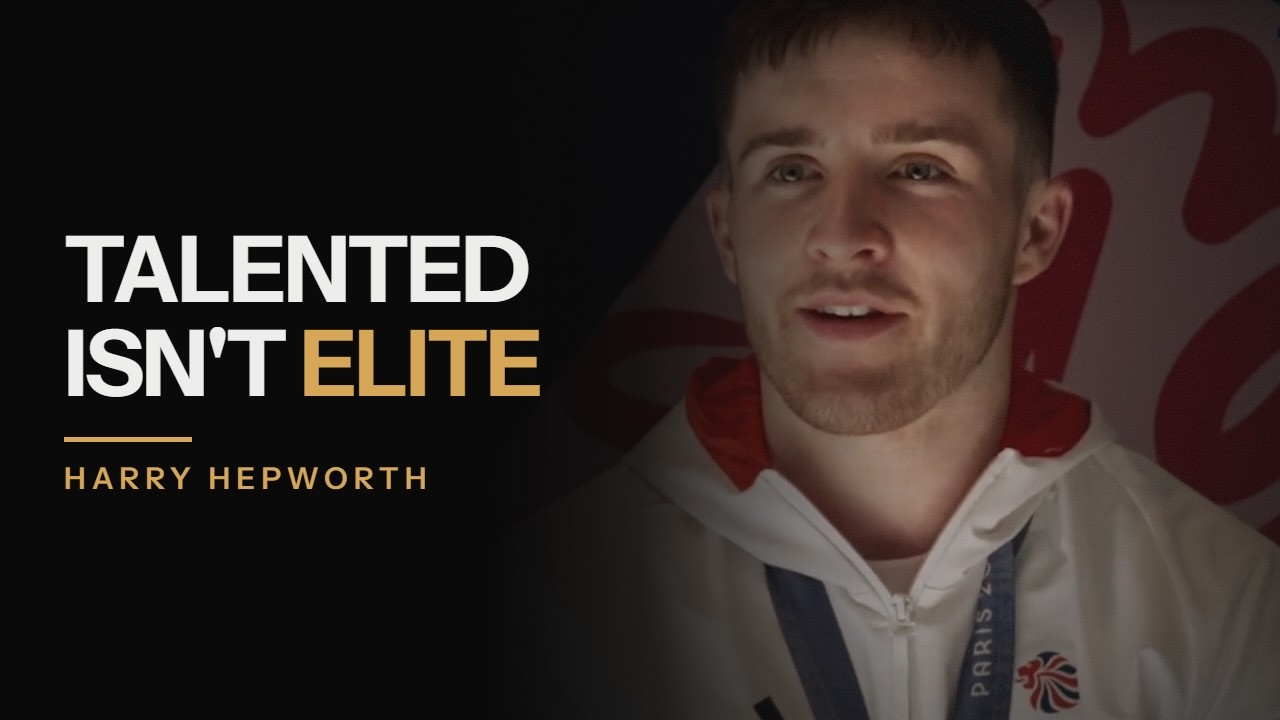
Harry Hepworth is an Olympic gymnast and Paris 2024 Olympic bronze medallist.
In this Harry Hepworth interview, we explore the mindset, discipline and mental toughness required to perform at the highest level of gymnastics and elite sport.
We explore what separates good athletes from world-class competitors, how elite performers handle pressure and the mindset shifts needed to overcome mental barriers when everything is on the line.
Harry opens up about setbacks, identity, discipline, confidence and the responsibility that comes with being an Olympic athlete and role model. We discuss peak performance, mental toughness, performance psychology and the habits that help athletes consistently perform under pressure.
Whether you're an athlete, entrepreneur, creator or someone pursuing ambitious goals, this conversation provides valuable lessons on resilience, focus and high performance.
Jump to a moment
- Intro
- Childhood & Overcoming Perthes Disease
- The Pathway into Team GB
- Nailing the Basics & Standing Out
- Realizing Gymnastics Was More Than a Hobby
- Staying Driven Through Slumps
- Sacrifices & Friendship
- Talented vs. Elite Gymnasts
- Nutrition (The Chicken & Rice Diet)
- Managing Nerves & Pressure
- Dealing with Bad Routines & Mental Chatter
- The Olympic Experience & Winning Bronze
- Money, Sponsorships & Gymnastics Funding
- How to do a Back Lever
- Harry's Hardest Skill (Vault)
- The Easiest Apparatus
- Impressing the Judges (Podium Training)
- The Secret to Sticking a Dismount
- Qualifying for the Next Olympics
- Olympic Village Life & Meeting Andy Murray
- Dealing with Being a Role Model
- Outro & Where to Find Harry
- Intro
- Getting started in gymnastics
- Where you have to train in the UK
- Deciding a routine with your coaches
- Staying driven through all of it
- What separates a talented gymnast from an elite one
- Managing the pressure
- Going to the Olympics with the team
- Being among the best there is
- How the money actually works
- What it takes to train for it
- How you train vault
- Sticking a dismount
- Playing it cool
Full transcript
Read the whole transcript
Made automatically from the audio, so some words will be wrong. Tap a time to hear that part.
0:00One, we're now live. Harry, thank you for joining me today, man. Sweet, welcome. Well, pleasure to be here, actually. It's my second time doing a podcast, so let's see how it goes. You're just as nervous as I am, probably. Yeah. So, for the listeners who may not know, like you and your story, tell us a little bit about your background and your achievements. So, I'll start off as when I was a young kid. I was always quite energetic when I was a a young lad, you know, I'd be running about everywhere, just chucking myself off self as doing anything. And I think when I was in reception, I don't know how old I was, maybe
0:42far or something back then, I was diagnosed with a hip condition called birthdays disease, which just essentially means that the ball and socket in your hip, the ball bit wasn't being supplied with enough wood. So it just sort of deteriorated and went from a ball into like an oval shape. So I was kept away from the spot for about three years, which was obviously being quite energetic. It was a bit bumpy, very nice. But towards the end of that, in school, we had an assembly with a coach from the local gymnastics centre and he demonstrated a backflip in the assembly. And everyone was like, Oh my God, how do you do this? And so
1:25was I. So I just wanted to get started and learn a backflip at the gymnastics that he was from ever since then. I've just sort of progressed and progressed and I'm a Olympic medalist now, multiple European medalist as well. So just that sort of assembly has led me to do all these crazy things in my career. That's crazy man. What was the, I'm curious as well, the pathway into getting into like team GB. So how did that sort of happen? Because I'm sure a lot of people that will listen would want to know roughly what that route looks like.
2:05Yeah, so when you're a young gymnast, there's the National Grades group teams and it goes from about level one to level six and you just go up a level each year. So it's like it's age grouped essentially. And it's usually like the top five or ten from your year gets put onto the elite performance squad with Team GB. So that is the pathway into it usually. But also as you get older and you don't have to do those routines, you'll do competitions like the British Championships, the English Championships. And if you perform well at them, and the national coaches see you and think, oh wow, this kid's got a good bit of talent, they can put you on the team
2:54from then as well. So those are the two main ways really of getting to the national team. Do you get so I'm assuming the like scouts there at those big events and then obviously like you say you perform. After that you have to go to like a set place in the UK to then train some more like do you have to travel there or is it kind of like you can go back to your local club, keep training, keep putting in the work there because you've been even though you've been selected. Yeah, so when you're on the national team, the whole camp throughout the year, I don't know how many it is now, but it was maybe five or
3:35so or something when I was a young kid. And you go to the little shuttle national spot in center, which is in Telford near Birmingham. And there's which is state the art facility there, it's amazing and the whole team just trains there for like a week I think four days during the week and you just sort of show the National coaches what you've been up to, how you're progressing and how you compare to the others. I thought that was amazing because I mean you get to you get to have your own room as well at that point so you're quite young obviously it's quite a cool experience having your own room having to clean it, keep it tidy enough
4:12for the week. But you, in between those periods, you're just training like normal at your own club. It's not, it's not like a thing where you're sent off to this place for the rest of your childhood, really. It's just, you go there maybe five weeks out of the year to train with the team, which yeah, it's really, it's really cool. Did you so when you first went to train with the team, did you see like other sort of gymnastic styles that were part of team GB there as well. What was that like for you seeing those? I was quite nervous to be honest when I went to my first one because I had a bit of a sort of
4:50untraditional way of getting onto the team. So when I was on about those level routine grade things, say I'll give an example, say in level three there's an elite routine you can do or there's a club routine you can do. The club routines were easier and it was for gymnast that weren't maybe pushing for the elite routines. And usually it was like the top five or ten out of the people who were doing the elite routines that get onto the team whereas I wasn't able to do those routines so I did the easy routines, the club ones and I think I came second one year on there. And I went to the reward for coming second was we got to go to one of the training
5:34camps at Lauschol just before Christmas for a bit of fun with the rest of the people who did club great routines and I must have impressed them a lot at the training camp and I managed to manage to get invited onto the national team which was it was a bit surreal really so when I first went to that camp I was a bit like I felt a bit out of place because obviously these guys have been doing the elite routines and I'd be doing the club ones so I didn't see myself as as good as them which I wasn't to be honest at the time.
6:06I was still, I wasn't all right, nice, tidy gymnast, but I wasn't pushing anything crazy which some of the others were doing. So yeah, I was just really nervous at the first camp that I ever went to. So I suppose that kind of proves a light point as well as like, even though it's not the elite level that you were performing, you had nailed the smaller things, should I mean like some more consistently, were all nice and tidy and sometimes that can be, it doesn't have to be a big, obviously, eventually it kind of does have to get to that level of like doing different things but
6:41at that moment it didn't have to be like these great grand things that you're kind of okay at doing it was just like yeah I'm just going to smash like these routines all the time, perfect them and I'm going to shine more than others in that area. I think it was quite cool. Yeah, I think you put it, why, worded it perfectly there. Because I often think nowadays, like, there's obviously some really great kids that are coming through doing some high level things.
7:09But I often look at the other ones that maybe aren't in the spotlight, but are doing some really clean work. Because you can always see the potential out of them as well. So I think going forward, I think British gymnastics have sort of not always looked at the best kids, but they've sort of looked at the other ones that are nice, clean, not doing the hardy stuff, but they see the potential in them.
7:32Yeah, I like that because sometimes it can get overlooked like this. I don't want to call them simple because they're still difficult, like for even for something like, yeah, I'd be like, I've done how to do it. But for your sort of sport, they're the simpler things, but they're not being overlooked. They are now being sort of taken into consideration. like okay they can because obviously I think it's like scoring isn't it for competitions if you can do those little parts perfect that's obviously gonna aid in the score and then obviously you do the big things and if they're not as great you've got the sort of lower end things to push the score I guess like
8:12I don't know do you know it's such a hard thing yeah no it's incredible hard because I mean, yeah, yeah, as long as you've got some parts of your team that are absolutely pristine. I mean, you always want things to work on anyway, because nothing's ever perfect in gymnastics. Like there's always little bits and little margins where you can improve your skal on. So yeah. How do you decide your routine? Like, is that something you speak with your coaches about?
8:38Is it what you feel that you're good at? Yeah, so I think when you're younger, so in gymnastics, you're a junior up until you're about 18 and then you turn into a senior gymnast. So as a junior, usually you have a conversation with your coaches and they'll make the routine for you and yeah you just sort of compete them for a while and slowly progress each sort of skill. But once you're a senior you have more of saying what you want to do because you'll be trying a lot more skills for you and maybe the coaches will help with the structure of the routine so that skills can go, you
9:19at the start or at the end depending on how hard and difficult they are. So you traditionally want the harder skills in the first part of the routine because you've got the energy and then sort the lower end skills towards the end. So you don't have to use a lot of energy to do them, but you can still make them walk nice if you know what I mean.
9:41Yeah. When did, just like pulling it back a bit, when did you realise that this was going to be more than just a hobby for you? When I was training, when I was younger, I thought of always, it was always my dream to go to an Olympics and be amazing and win all these medals and stuff. And I believe that for a fair few years, but then obviously, once I saw I was going through the end of my junior career. I don't know, I still sort of believed it deep down, but seeing all the other gymnastics it's sort of put that thought in my head like, oh, I've got a really one way to go here if I want to
10:24make it. But I think that was just a lesson like it just takes time. Nothing ever comes instantly. It's just you got to be consistent and you got to persevere for a lot of time to get where you want to be. So did you always kind of know like deep down that this is not going to be a hobby for me? on doing this because I want to get to the top and even though at moments it may not have looked that way, you still was just like, no I'm going to get it, I'm going to keep training, I'm going to keep pushing.
10:55Yeah, I definitely knew I could do it, it's just the time it takes now, I didn't know when I was a junior, if I'd be able to grind through them long periods, but I just sort I stopped to it, looked at it, it did pay off in the end. How do you stay, how have you like person, he stayed driven through the whole time? Like, what's been your sort of number one motivator?
11:26Or is it just because like, it's all you know. So just to touch on like Andy Murray, I watched his documentary with his hip. And he was basically having like a call with, I believe it's like a therapist or someone anyways, but he was like, I don't know what to do without tennis, I've done it my whole life. I don't know what I'm going to end up doing after.
11:45And that was like quite a scary thought for him for yourself. Is it like because it's all you've known it's kind of carried you through or has is there like other external factors that play a part? I don't really know to be fair, but I've always if I'm ever in some sort of rocker, a slum part of dip, it's I just sort of stick with it because that what else can I do? What just quit. That's not going to make me any better is it? So I think just sticking to my processes during those times, it's really benefited me. And if I can do it when I'm in a slump, I know
12:25I can do it when I'm feeling 100%. So that's always worked well with my mind. But yeah, I think it's just you've just got to stay consistent. It will be boring and it will be tough. But if you do the right things, you'll come out the other end even better. Yeah. Do you think the success element you've had as well is kind of, I guess, I want to say, like motivation sometimes because you felt that success at the top, you want to chase that again, and that also adds like that bit of fuel to get up and carry on?
13:01Yeah, 100%. Because me and my teammate, Luke, at my gym, always joke about it, because we went to the Olympics together and obviously we were in the best shape of our lives and I feel like we're always chasing that sort of fitness level. So every time I go into a routine preps, I just want to be as fit as I can be. I want to be feeling like I was pre Olympics where I was able to do routines whenever and it wasn't that hard. So I think chasing my previous fitness goals, I think that plays really well for me because I just get really fit before these big competitions.
13:42And do you think like, because you said you've always been energetic and stuff like, do you think you've been like, were you born? Do you think with this mindset that you've got now like to push through those things because you've always wanted to be doing stuff and keeping active? And also you did have that sort of setback when you were younger with the hip and not being able to do anything.
14:05Do you think that kind of drilled into you early, I suppose, that this is a privilege to be able to do all these things or not, or do you think it's just something that you're just literally born with, or do you think those things have aided? I think those things have aided me. I don't think I was born with this sort of mindset. I feel like my mindset's changed completely in the last three, four years.
14:28And I don't really know why, but I don't know if it's just a case of getting older. You understand things more. There's more things on the internet that I see. And it's just sort of built up over time to where I am now. So yeah, I don't think maybe when I was 16, I don't think I had the right mindset. It was all right. And it allowed me to do the things I needed to do.
14:54but the mindset I have now is much better for my training I think. So yeah, I don't think I was born with an amazing mindset really in terms of sport. Do you feel maybe your network of people has aided that as well? Because I always think to myself, like, if you're in the wrong crowds, you might not get to where you want to be. Like, what sacrifice did you have to make in the sense of like friendship groups maybe, evening's out, I don't know like what was for you?
15:26Um, I'd say the people around me definitely, uh, have helped me to get where I want to be. Like, especially my coaches, um, is they've just taught me so much in terms of how to deal with things in the gym. And I don't always stick it, stick to it at all times. But I understand what the right thing to do is and the things that will help me progress.
15:48and that purely is down to my coaches and in in terms of friendship, so I mean yeah maybe when I was younger I didn't really go out and see my friends much but it was just because I was training every evening like it I just couldn't fit in any time because I had to be up the next morning for school and whatever but I didn't really see it as a sacrifice it was just I wanted to be amazing at gymnastics and I'd do everything everything it's all career where I want to, I want to, foster with all that side of things if I'm being fully honest.
16:22Yeah. Yeah. Now I think that's, um, it's still like you did sacrifice stuff. Do you know what I mean? Like maybe experiences, even though you don't see it that way, because you were chasing what you wanted to chase. But I think for people that are moving in any field, I think it's important for them to understand that that you are going to miss moments. and have to give up moments whether you care or not to pursue your dream do you know i mean like i totally get what you're saying gymnastics has always been your thing so it hasn't been a sacrifice to not be around people that maybe you're just going out partying or drinking or whatever
17:02because you're so focused on what you want. So it's not even a fault that you're missing out. Do you know what I mean? Yeah, I understand it. Maybe it's because I've had a good set of friends where I don't need to see them all the time for them to be my friend. Like we could see each other once a month or once every six months and we'd still be close.
17:22I think those are the star friendships that are perfect for me. But last then, I agree. I'm like that with my friends. I'll just go around with like six months later. It's like it was like I've seen in the next day. I was just like, mate, and they're like, I was like, you know, it's such a everything's perfectly novel. Yeah, like gives that sense of like, I don't know, it's just weird.
17:44It's just to be around good people, I suppose, is like, yeah, you can just walk back in and click. It's just like you never left. I mean, you were speaking to him four hours ago and you're there when you haven't. It's my idea, exactly. And so what do you think separates like a talented gymnast from an elite level? gymnast. What was the difference there? I think it's the way you train to be honest.
18:10I tell you gymnast, yeah, they can do the skills, but can they put it into a routine? And that's something I had to learn as well. When I was going into my first senior year, I could do some crazy skills, but in route, I just wasn't going to put in a routine, and I'd be following and doing whatever whereas now all year round I train combinations of those skills even when I'm not supposed to be doing routines I'll always do combinations so I'll do maybe three or four skills in a row just so I'm still building that it's almost fitness so I think it's down to the work and the
18:49consistency they put in behind the scenes I think that's the big difference. And do you think that as well, like you say, obviously you come home, what you're eating, what you're consuming, there's obviously sacrifices there, right? Like in the sense of maybe nutrition to perform at that level. I don't know, you know, maybe you're eating dominoes four times a week and you're just gifted to have no idea.
19:13But I'm assuming there's like some sacrifices there in the home life as well. Yeah, I mean, a few years ago, maybe three or four years ago, I used to not really walk into what I was eating, I didn't really believe in it and whatever, but I don't know why I just sort of switched it up a bit, which we have chicken and rice every morning, which we every single morning every day.
19:42And that just does it for me. I mean, I'm not really into eating greasy foods anymore. I don't really have fast food. I can't remember the last time I had one, to be honest. extremely rare that I have one but I mean just sort of talking to my coaches and talking to the nutritionists around me, it's open my eyes to how much nutrition can actually aid your performance.
20:04On a training day I don't eat just to eat, I eat to fuel my body so that I can train well so I can improve so I can be better at the next competition. So yeah, ever since I switched it, my training has definitely improved a world. get bored of chicken and rice every morning man. Come on. There's some reason that don't. It's weird. Like I should get bored so easily.
20:30But I just know it's what I'm used to. It fuels me perfectly for training. So I just stick to it. Oh man. Like I did a chicken and rice for like three days just for dinners. I was bored man. I was like I need to get some laughs. You can have season in like it's fine. But I'm like still just chicken. I needed some cows. I don't know how you do that.
20:49I know what you mean though. Before you perform, you're nervous, like how do you manage that pressure? Well, I used to be really nervous of competition and I think it used to affect me negatively. But in 2023 I was listening to this John Jones quote, and I can't remember how exactly it went but he said your nervousness is like a fire and you just need to harness the fire to perform at your best.
21:29So I think it's just being able to control your nerves and control everything during competition. I think that's the key to it because you're always more powerful in competition with nerves. It's just the adrenaline. But if you can learn to use that to your advantage and control it where you need to I think Yeah, you'll accomplish crazy things in any spot if you can do that and it's really helped me massive What you have like any?
21:58Techniques at all that you use or is it just like a switch like in your brain you're like this is actually good for me I'm just gonna go out there and smash it. Let's go show time, baby, you know clicking the fingers. Let's get going Yeah, essentially. I mean, if it's over a few days of competition, I mean, I'll, I'll do other things after the competition's just to like switch my brain off maybe, just do something that's not really, it's a gymnastic so that I'm not thinking about it. But then also visualization, I think just visualizing the routines I'm going to do say the next morning or whatever, it just, it gets the motions into your head, you know, it's like
22:34the law of attraction, the more you think about it, the more it will happen. Yeah, that's maybe the only thing I do. I don't really do much else. It's just visualise, feel the nerves and just imagine that I'm just in the gym training as normal, doing a routine, I think. You think as well, like part of it is obviously you have done, whether it be in training or just a sort of smaller competition that gives you that confidence in yourself as well to be like.
23:07I've done this before. Now I just need to visualise me smashing it out of the park. It's no problem. It's all cool. Let's go for it, you know. Yeah, I mean, a million percent, like the more work you've done in training before and the more confident you'll be on the day, that's just how it goes. So yeah, I really do believe in that before most of my competitions are I just makes, I just know that the more work I do in training, I'll just feel better on the day and more confident than I can show my best work.
23:39So yeah. How do you sleep the night before man? Like I tried to go to sleep last night, right? And I'm thinking about a meeting that I've got to work and I just couldn't switch off because it was like stress, not stressing me out. It was like positive, positive meeting. but just stressing me out, I'm like, it's like two o'clock in the morning, I'm like, need to sleep, what's going on?
23:57Before you perform, even at the Olympics, like how the hell do you switch off and just drift? You know what? I don't even know, because I was having mentally stressed for these conversations and so am I, I just go to sleep, I just start thinking of other things in my head and I just slowly drift off, but there's a lot of times where I don't end up sleeping that great just because of what I'm thinking of.
24:21But I don't know, maybe it's just different person to person. Maybe some people can just sleep through stress. I know those aren't as good, but I've always managed it pretty well, to be honest. And how do you respond to say like you're a routine that doesn't go to plan for you, or you kind of know that that wasn't your best performance? Like how do you respond to that?
24:41What's like the negative talk like as well? Yeah, you're doing bad routines for me. I'm always really unhappy with it. it's something I've got better with over time but yeah I really struggle with that it's I don't know it almost makes you feel like a failure but I'll only feel like that for maybe a couple minutes and then it's like oh right I've messed it up I can't change it time to move on to the next piece give it everything in the next piece I can sort of use it it's my advantage instead of it just messing with my head I get the weekend I was just competing at the
25:18British team championships and I sort of messed up my four team slightly. I didn't fall but it was a big deduction and afterwards I was a bit like that's such a shame because I'd done really well in the other tumbles. So I know it was a bit frustrated but then after a couple minutes it's like no you've got to move on. I'm performing for the team here when you get a good score so I need to move on to the next apparatus with a good mindset and just use the frustration I guess. So yeah.
25:49No, I understand that I'm the, uh, honestly, my mental chatter is awful. Like, even if I train in the gym, just lifting weights, if I'm doing like a bench press or I try doing like a handstand on some rings or whatever, which is impossible for me. But I try afterwards, I'm like, in my brain, I'm effing and Jeffing, I'm calling myself a chunky boy. I'm like, you would scrape that in my brain and everyone's just like, I seem like, mate, like, you're right.
26:14and I'm like, yeah, I'm fine. But in my head, I'm like, I need to get back on there. I need to push again or whatever. And correct this. And it's probably not the healthiest, but it's just what motivates me. And I mean, I have that negative chatter inside, but it fuels me to push and train harder because I want to achieve it, because it's bothering me. Whereas if I didn't hit the bench press and it didn't bother me and I didn't have that, I'd know I don't care as much.
26:41So I'd be like, oh well, it's kind of irrelevant. So I like it, but I have that, but it's probably a little bit extreme. No, I think it's the exact same of me. And I mean, if you didn't react at all and you had no emotion about it, yeah, you probably wouldn't be that caring of what you do. So I guess, yeah, like you said, it'll just make your train harder and longer until you can actually do it.
27:06What was it like for you going with the team to the Olympics and being there and being in the Olympic camp. What was that whole experience like and then obviously achieving bronze medal. And you're the first male to achieve a bronze medal. On I'm going to get this wrong so you can just interrupt me and tell me because one of one of the few things but I think it's vault I might be wrong.
27:31Yeah, yeah. Yeah. Yes, I've got a good memory and what was that like for you that whole like experience? Yeah, it was amazing really because as a gymnast, I'm pretty sure everyone who wants to be at the highest level, it's their dream to go to the Olympics. And I was fortunate enough to be selected for that team. And yeah, I mean, in the training camps, I was training with like Max Whitlock, who's on it. I want to say triple Olympic champion.
28:00So he's been there, done it. He's achieved literally everything. So to be training with him, it's almost like it's a bit weird because I was watching him when I was younger. Yeah. There's a bit surreal actually but then going into the training camps, you know, seeing the team come together and we're just smashing out our work, training our best, eating healthy like it was, we're all just locked in.
28:23So I think going into the Olympics is the biggest company of life really but because you've done all the work it's nothing different to what you've already done. I didn't feel maybe I fell a little bit more nervous, but it wasn't crazy nerves. I was sort of really excited as well. And then to come away with a bronze medal on the vault, I mean, yeah, it was just nuts.
28:49Like before the vault final, I knew I could do it if I landed my vaults, but it just always comes down to who wands them the best. And I was second up out of eight people and I got some really good scars and I sort of had to wait there for the rest of the competitors to go just watching them nail their vaults as well and just seeing what scar they had to as quite nerve-racking.
29:12And it felt like years just waiting through that vault final but yeah, it was probably the best experience in our life. That must be just the best way I could describe it. It's like when I was like eight, I used to run 100 meters and I used to like a sports day, you know, and I'd just have those butterflies and then I'd run it and they were gone.
29:31But for you to sit there and just wait and see like every person sort of doing theirs landing and you're like looking at it, you're kind of critiquing it yourself. You're like, you know, when it's good or you're like, oh, that was quite good, that one. And then you see the scores just having that like constant wave of just like, oh God, like nerves kicking in. Am I gonna stay where I am?
29:50What's going on? I don't know, it must be a horror, personally horrible to deal with but each to their own, do you know what I mean? Yeah, it was awful to be fair. I mean obviously I wouldn't change it for the world but yeah it was just because everyone was just absolutely nailing the vaults because everyone prepares very well for the Olympics so it was yeah like if you take one little extra step that's a tenth gun and you might be down from like first place into fourth place or something you might be off the podium so these little steps and little things cost so much and obviously if you're under that much
30:26pressure it's going to be hard not to take those little steps and get your technique right and run down the vault room, right? So yeah, it just nuts. Do you, like, how do I explain it? It's just, you still chasing that buzz. Do you know what I mean? Because like when people hit that like high and that adrenaline and that buzz, is it something you're like still trying to chase, still trying to get, still trying to find, you know, when people get out of an aeroplane, they're like, I want to go again, they're like chasing that buzz.
30:57Is that something that's like motivating you as well? Yeah, definitely. I think my overall goal is to become like a world champion and Olympic champion. So that's always there and that's my kind of buzz I guess just trying to achieve them. So yeah, I do chase the buzz a bit and that sort of motivates me to work hard during the gym. So yeah, I don't know where I thought about it like that to be fair.
31:27I don't know, it's just, it could just be like saying, it might not be what you're using as your external source or internal source to get there maybe it is just the goal. But I always think with, and this is my issue with like Olympics and Olympic athletes, is the, I want to say like exposure and cash and stuff like this, like at the end of the day the Olympics is the number one sporting event on the planet. Like everyone watches it and it's just like, I mean I might be wrong, but you've got like athletes that are like part-time plumbers. Do you know what I mean? It's just like, how does that make sense?
32:08This is like the Crem, the LeCrem, the best here on this world stage performing. Like you'd think surely there should be more pay, more sponsorship deals for people. Do you get what I mean? I don't know if that's like a frustration you've personally felt. I mean, yeah, it's obviously a bit frustrating, but if I wanted to make loads of money, I want done gymnastics, I kind of had a just done football or something. But in gymnastics is like the second most viewed thing at the Olympics, I'm pretty sure. But then over the net the Olympics, the viewership is not that great. So, if you get in sponsors, yeah, it's going to be good for the
32:49Olympics, but then for after that the other competitions, it's not going to be amazing. So I think that's where the issue is, like football gets crazy numbers every single football game, they get loads of fans showing up buying tickets, buying merch and there's just not that in a lot of the Olympic sports and I think a lot of the companies that sponsor athletes, they've gone up like leads and a lot of them have gone towards like fitness influencers which they'll bring in more views and more clicks and more everything. So I think that's where the main issue lies, I mean it maybe it is a bit frustrating, but it's like I wouldn't have got into this spot if I was just wanting to make some money
33:36That's true. It's more for the passion and the love of the game as they say, you know Yeah, over the game purely. Yeah What was the like national I think it's the national lottery that do the funding what's that like for? You guys how does that work like monetary wise? I've always been curious like how is that delegated? is it just the camps that are paid for and secured? Do you personally get paid like a bit of that funding to cover certain costs? Like how does that all kind of work out?
34:04Yeah, so training camps are paid for and then also based off of how we do in competition, there's like a ladder and there's levels of the funding and it goes from like e-funding to a-funding and obviously the better you're doing competitions the further up the ladder you'll go and yeah, A funding's pretty good in terms of what you get. Then it is obviously the lowest level of funding but it's still alright for saying up and coming Jimnast. You can start manage I guess but yeah and then I think, I think how the actual whole spot gets funded.
34:50I believe at the Olympics our target from UK spot was to get two medals and that would secured as our funding for the next four years till the next Olympic cycle. So me and Jake got the two medals there and secured the funding for the next. I mean, we don't see a lot of that, but then it gets put into us without us actually noticing. Say when we go to these camps, there's always physios there, which can treat us at any time. There's nutritionists, there's all the technology that's used, and there's so much technology in the UKSI sports center that it's just, yeah, a lot of the investments we don't see because it's just
35:33going directly into us from British gymnastics. Yeah, I like it's going to coach and staff and whatever, just even the facility itself. And obviously you are seeing the rewards of that rather than training in a basement somewhere with a couple of metal chains on the roof. So I totally get that. I just, I don't know. It's one of those things for me personally. I just think like, you're like the third best in the world.
36:00Got bronze. Yeah. Do you know what I mean? It's like, where's the, I know for you, there's that achievement, but I'm just like, where's the big A? Yeah, I know. You know, you're like the third best on the planet, like, in that field is crazy, man. I know we often say, because in the great-grant team, we've got, which we three, the best four workers in the world, there's me, Jake and Luke.
36:23were like we're untouchable so we often call ourselves like thing is messy so I was a name out maybe or something. Nice. And it's like if we were in football at the current level where at we'd be getting paid millions but then we're in gymnastics and we're getting paid just I don't know a normal money I guess. Yeah I mean something's better than nothing I get that 100% exactly and UK National Lottery do an amazing amount for us. Just the amount they invest into each spot is absolutely notes. So yeah, they do offer us.
37:03Brain in question for you. How the hell do you do it back lever? Which ones that the ones on the rings with your hands in the rings and then your legs go straight behind you? Do you know what I mean? Yeah, how'd you do that? How do you change that? It takes honestly, it takes years. Jimna Santel out to do it until they're over 16 or something like that.
37:28I might be until they're a senior, it's not really. It used to not be allowed when you were that young. It's just all the stress on your elbows, your shoulders, it just does take years to learn. It took me a fair while to learn. But I'm quite, I'm quite short and a bit stocky, so it's, stocky so it's it's a lot easier for me with short levers where as someone who's a long gymnast they have long legs and long arms so obviously got way longer levers so it is just harder for the tall ogernast to do it that's why I say if you watch a rings final everyone's so
38:02sharp I mean you probably won't be able to recognize it because everyone in the final shot so you don't just look normal but honestly we're all about 5 foot 3 are shorter all of us. They come down to leave us as well. Yeah. I'm five for seven and I'm quite stocky. So I'm quite short and I try and do one and I'm just like, just all over the place. Yeah. Honestly, it's awful. It just destroys everything as well.
38:32But once you do, it's well cool to do so. I'm old as well. I'm 34 years old. I mean, I'm like breaking every little movement I do. I'm like, oh, I do like a just an L set straight arm L set in the rings. Am I like, yeah, my pelvis, my lower pelvic area, just like Paul's. And I'm like, like, yeah, you don't realize how many muscles you do use doing these things as well.
38:58It's, yeah, you use pretty much all your body to do these crazy skills. No, I couldn't believe it. Like, because I made the change from like sort of bodybuilding style of training to like a kind of aesthetics sort of way of training. So I use like bars on the floor and stuff like that, probably not all great things to do. But I'm like, why is this hurting today?
39:20Like, how have I, where did this muscle come from? Like, and it's for me personally, like, I feel like even though it does kind of destroy you a little bit, it's better for better than lifting like really heavy weights and putting like real heavy loads on yourself consistently. It's just my opinion, I wanna be a bit more mobile and I'm like so more focused on mobility now and movement because as I get older I wanna be like walking and fluid.
39:49Do you know what I mean? Rather than just like some rolled up big guy that's how I thought he ain't got bad knees. I don't know, that's just the kind of- Yeah, I know exactly what you mean though because there's a lot of bodybuilders that can barely put their arms behind the shoulder and the head, sorry. It's like, yeah, you can lift some crazy amount of weight, it's still getting me wrong, it's impressive, but You can't move right.
40:10So what's the standard of living like? I mean, it's not nice. Like, yeah, I agree with you. And what's, I was trying to think there as well with like, they can't even do their pull up. Yeah, exactly. And even if they're on body weight, I'm like, you're all right, mate. Exactly. You lifted all these heavy weights, but you still can't do a pull up. Like it, don't get me wrong, it's crazy impressive.
40:32Do you matter how weight that they're left but, yeah, I prefer being a bit more mobile and flexible as well. What's your most difficult exercise routine, like what's the most difficult part of your game that you really struggle with? Oof, that's a good question actually. Sorry, I just throw that in there. Yeah, that's a good one. Well, I only do three pieces out of the six, so I do four rings and vault, and I'd say maybe my vaults are the hardest, Definitely at the minute currently the difficulty is that I'm doing and that I've done this year They're they ranked the hardest vaults in the world And I don't I don't think anyone else is doing the vaults that I'm doing. I think one person or a couple people previous
41:31Have done the sort of two level difficulty vaults that I've done So I'd yeah, I'd have to say they're the hardest and even training them is quite hard because Because every single day you have to be 100% but you have to be on it so that you can actually do them because they're so hard you can't just not do it some days you have to be really consistent but there's also smart ways of training it.
42:01So say some days I'll do normal vaults to a normal winding area and just try do them but then there's other days where I'll stack over the blocks up at one side of the vault and I'll just try to do like a hand spring with a single somersault. But obviously one, one done a really high platform so it encourages me to try to go higher and use the correct techniques without actually having to put the same forces through my body.
42:24Yeah. So yeah, there's just a lot of smart ways about going about things without putting all the stress through your body. And how do you actually want to say train it because like if I want to practice back flip, Obviously, I know you've got to do it, but it's just like, how do you, and that's just a backflip, how do you like train volts so well to the point of like, where you're spinning in the area, you don't just land flat on your face or on your neck or something, you know what I mean?
42:57Like, how do you prevent that from happening? I think it's just a build up of everything over your whole career. You know, even from when you're really on like seven or eight, or younger, you can be doing loads of flips off the trampoline but at first you might not know where you are but if you do more of them you sort of get this thing called spatial awareness so you know where you are in the air there's certain cues you can look for like where to open out and one perfect or whatever so I think from a young age you just start building that and obviously for vault you have to be quite a fast twitch explosive kind of person which
43:36I am, which is quite fortunate. It gives me the ability to do a lot of really cool vaults. But there's just a lot of drills that you do when you're a young gymnast that just help you when you get to an older gymnast. It's quite weird. There's still things that I do now that I was doing 10 years ago, just because it's a really good drill. It just gets everything moving and firing and you're thinking about the right techniques and stuff like that.
44:05And what do you think's your like easiest thing to do as well? Because obviously I asked you your hardest, what do you find the easiest for you? Oh, God. Um, the pressure's on it because in two years time, if you do it and you don't don't know, but like he said, it was easy. I think, I think realistically and statistically rings, you can't really fall during the routine.
44:32The only place you can fall is on the dismount. And you'll be working the dismount a lot anyway. So I mean, I told my dismount last year actually at the World Championships and Ring. So it's a bit of a lie. But yeah, it's just really hard to fall off during a rings routine. I think that's just the easiest. It's probably one of the hardest to train to get to the four routine.
44:55But once you've got the four routine, it's hard to make crazy mistakes on it. Yeah, I go out. You're kind of, because the momentum and everything's there. and you just know like I'm going from here to here to there. Yeah, whereas on something like the high bar, you know, you're letting go and doing flips and trying to catch the bar again. A lot can go wrong in that, whereas on rings, you're just holding these strength positions.
45:19It's kind of hard to go crazy wrong unless you haven't trained properly. So. A little, I wanna say it's like a conspiracy question, but it's probably not. It's, sometimes do you know like certain judges and you're like, maybe I need to do this routine or do this a little bit better because I know they're specifically looking out for something. Any of that at all that comes into the brain?
45:45Yeah, definitely. I mean, so at these big competitions, we have something called a podium training session. So maybe a day or two before we'll go out into the arena and do our routines with the same timings that we'll do in the competition. And there'll be judges there because they'll be wanting to to sort of just get used to scarring gymnastics and doing whatever. And so they'll see you in podium training.
46:10You can often just go and ask the judges, like, what did I do wrong in this routine? And what would you deduct and all that? And they'll often just tell you what you've done wrong. And then if they see you make that improvement when you are actually competing, it'll just leave a good impression, I guess. And I mean, people often always say like sticky dismount at the end of a routine because that leaves an amazing impression on the judges.
46:38And I definitely think that that's true to an extent. So yeah, there's just little things like that. Nothing, nothing crazy big. How do you stick a dismount? That's my other question. I just see you just like land and it's just like, done. And I'm like, you just done all this stuff. I think it's like, eh. The only thing it sounds boring again but it's literally just repetition and consistency.
47:02That is just so boring. Let's say there's one of my tumbles that I do on floor. It's a double somersault with two twists and I've got really good at sticking that in training and I've stuck it a couple times in competition as well at the end of my routine. It's sort of just, I've done it that much that after the first twist I can see the floor already and I can judge where I need a sort of go and I can judge how high I am and how fast I'm rotating based off of my round off and how I've taken off the floor so I know when to open out and if it's bad and I'm not rotating I know to keep tucked still and sort
47:43of waiting extra little second like it is just a lot of repetition. I love how when you say these things though you make it sound like you say it like it's So easy, do you know what I mean? Cause you're also used to it, right? But for me, I'm like, if I ran, I'd probably just do a cartwheel, or a rolling pole in the floor, it's mad to see, I suppose, the difference of, you know, me being a nobody in that field at all to someone that's at the top level, just explaining things in the way, it's just like, yeah, yeah, you just do this, consistency repetition, which I do understand,
48:21is that is like a super important point, to be consistent and repetitive and that's how you're going to nail it but I just still think that's crazy man and for you it's just so easy to just do it. Yeah it's strange that because maybe once upon a time I'd have been dreaming to do that skill that I was just on about and now I can just do it like it's nothing so yeah when you put it like that it's nuts.
48:48Cool I've run out of everything I want to sort of ask you and cover is there anything you'd like to add at the end? Oh it's a good one. Um, only think. So I'll sing to the, I'll sing a little song whilst I go over it. I'll ask you a question if that's all right. Oh gone and yeah, I might not answer it though, I might just remain silent and then cut it out there. Yeah.
49:20I'll try and make it, it's a fairly easy question I think. Okay. So if you were doing, If you could do gymnastics, which apparatus would you like to do the most? I'd like to do the rings, man. And the double bar high bar thing. We like to do them. Yeah. I think that is. But then I don't know because vault not to not because you're sitting here like but vault is also so cool as well.
49:45But I think the rings because I think I'd be good here. Yeah, I always love rings because it's like if you can win that, you like the strongest person there. It's almost I don't know. That's what I want, like, you know what I mean? To be like, yeah, that's right. Yeah, that's me. It's different to like bodybuilding and weightlifting because it's all body weight. So if you're the strongest at that, like.
50:05I wouldn't like to do flor. I don't think I'd like that. Yeah, that one's a bit. It looks fun. But I'm just like, I don't know if that's for me because I don't like all the little things you have to do in between like the jumps and stuff, like the way you turn and move. It's just my kind of thing. I'm not a fan, you know? Yeah, I know exactly what you mean because I'm not great at them jumping things either.
50:30And they've changed the rules now so that you have to really properly extend and lift your chin up and make it more elegant, which it doesn't look better. But it's just like if you're wanting to do some crazy skills you don't want to be focusing on that. And also I think that favours like taller people to look at what I mean. That's short guys. We're like, yeah we ain't built for that.
50:50that. That's what it makes me laugh. So is your, are you secured for the next Olympics? No, not yet. I think usually a good, a good sort of test is the year before the Olympics. So in 2027, if you can, people always say if you can make the world's team that year, you're putting yourself in good stead for the Olympics. And then it does just go off scars, who hits the highest scores really, it doesn't.
51:24There's no real bias towards anyone, it's just whoever hits the highest score and who can medal the most and who can bring the most to the team and which people bring the highest team score together, it sort of just comes down to that, really you can't, like I don't know what I'll be doing in two years. Yeah. Hopefully I believe I can get there a million percent.
51:46It's just where I can get the scores. It's a weird actual, like that is actually a weird dynamic isn't it because they're your team. But at the same time, you're like, I kind of want you to fail. I want to succeed. But then at the same time, it's like, I know how good you are. So now I know I need to be better. Yeah, it's motivating. There's young kids coming up now who I've started noticing. I've been like, Oh God, they're good. I'm going to have to work even harder now to make sure that I'm still better than them by 2028. So it does keep you on your toes. And I think
52:19It's a very healthy thing. So yeah, I'll give an example, like this, my teammate at Leeds Gymnastics Club, were quite awesome. We sort of, because we're at such a high level, we push each other in the gym, like not intentionally, it's just one of us will do something crazy, and then one of us will up the other person, and over time that level just rises, and you just both become amazing.
52:50So I think it's good to have people keep you on your toes because it's very easy to get comfortable in the training that you're doing. You need people like that to sort of shift it. No, no, you mean like more like I don't know how to explain it. I suppose it's like almost exposure level a little bit, do you know what I mean? Because you're like 100% Yeah, 100% I need to go a little bit higher and better then because you're getting to where I am and kind of show it showing me up I suppose and that's going to motivate me even if it's just in one
53:21like small segment or section. Yeah, and I think that's a part of why we do those training camps at the National Centre because you can sort of have healthy competition with your teammates, see what they're doing, make your shake a bit, you'll have to do something better and it just keeps that level going up so they are really beneficial. Is there mingling I suppose I want to say, within camps so you know like you've got the your flex team and your side of things, the gymnastics team and the swimmers, do you all hang out or is it kind of like a bit, they're at their part, we're in our part, do you know
54:03what I mean? Yeah, I mean, where we train at Lowshawl, there's archery, I think, there's trampoline and there's tumblin', and a lot of the time the camps will be at the same times, so we don't really see them anyway, but even when they are there, I mean, as of since going to the Olympics, we've had to sort of live with them in their athletes village, and we all know each other more than anyone else. So it's sort of you will just get talking to them anyway.
54:30So yeah, yeah, I think the sort of encouraging us to sort of get together a bit more and talk more because it is a healthy thing to do. But we're just not there that much with each other. Yeah, because that's literally what I was thinking is like in the Olympic village, like, are you all in one place as a whole team, like the whole of GB together there? And obviously I get like you're going to gravitate towards your familiar people because they are your crew, you know what I mean, who train with in those camps and stuff like that. But I suppose being around everyone as well must be quite crazy, do you know what I mean?
55:09Yeah, so like in the Olympic village there was there's just purely like big flaps for each team so like GB had its own USA had its own and Me and the rest of the lads run the top four and we were literally opposite room to Andy Murray On the top four so it was like sometimes you just come out in the morning out your room and he'd just be there And you just go oh you're right Andy And you just be like normal, which is a bit crazy to be honest because obviously you've seen him on tv winning these tennis events and it's quite nuts.
55:40Did you, I suppose, like, because if it was me I'd be like, can we have a photo and an autograph please? Like, what'd you have to play at core when you're just like, you know what? Yeah, you have to play it a bit cool obviously. But me, my coach and like, we got a photo with Andy Murray just outside the building just before the opening ceremony. So we asked him early on.
56:02Yeah, no. We got it over and done with. But yeah. Yeah. That's crazy man. I don't know. I think I'd probably, I'm not gonna lie. I'm quite a cool guy. But even if I saw like, and the old summer I'd be like, yeah, can I have your photo mate please? Yeah, your eyes just do sort of, yeah. You're just eating that for a second. And you're chicken and rice, like, you know, in the morning and so, oh, you had it. Yeah, yeah, legit. Yeah, it's quite nuts. And there was people like, what's his name? We met Alcaras there as well, which was nuts.
56:34Yeah, Carlos. That's crazy, man. We're just going to the buses outside the village. So, yeah, there's people everywhere that you start anew. So... Do you not have to, like, because I'm getting jealous, by the way. I'm getting a little bit jealous. Do you not have to pinch yourself a little bit and you're like, I'm around these like superstars. Do you know what I mean? Within their sports and they're here.
56:56100%. Yeah, honestly, it's so surreal. Just like, you've seen them on TV, but in person, it's quite cool. Yeah. In the same sentence though, obviously for like gymnastics, you're that for someone else, do you know what I mean? Like you're that for the 100% that you've come in through and they're like, oh, that's not just crazy. Yeah, he's quite cool feeling that. Yeah, he's cool. I just, yeah, I don't know, I guess I'd have liked more interaction maybe from senior gymnasts when I was a young lad. So I almost try give a lot of the younger gymnasts that in the gym like I'll just talk to them. Because at the end of the day, I'm no different
57:34from them. I was them, not that long ago. So yeah, yeah, it's quite cool. Do you feel any pressure or do you even think about it that obviously you are like a role model to these people? Yeah, I do a bit. But at the end of the day, no matter if I'm a role model or not, my goals are always the same. So I don't really walk into it that much. It's just, yeah, I'll just sort of chat with them whenever I can.
58:01Yeah. Grounded. Yeah, 100%. That's mad. I think I'd be, I'd probably be a bit of an asshole. I'm not going to lie. I'd be like, no, no photos. You need to pay me money for my photo, Josh. I wouldn't be like that anyways, like if, you know, I ever do become super famous, I won't charge photos. But yeah, just for me, honestly, it's mad. Like, I admire the Olympics so much.
58:27I'm a big fan. to watch everything on there as much as I can. It's every four years and it's just crazy, man. You'll just live in the dream, I guess, with that. I suppose for you, it's just everyday life now, but for people listening, it's mad. Yeah, very fortunate to be in this position, though, as well. I'm very lucky that I'm not doing a normal job currently. I get to do the spot that I love and make it living out of Yeah, very lucky.
59:00Yeah, there you go then. We ended up actually talking a little bit Then I thought I thought it was gonna end it and we ended up going off on a Well covering other things and just relax. I guess I suppose as the way sweet. Yeah, I Appreciate you coming on Where can people reach out to you? For if they want to invite you on the podcast and have a chat with you Yeah, it's just usually my Instagram and then I have my management team tagged in my bio because it's just Harry help with on Instagram. I'll tag the description. I like it in the description as well. So if anyone does want to reach out and request user guest, it can be cool. Yeah, cool.
59:46Cool. I appreciate you coming on man. Honestly, your time's been great. I enjoyed the conversation. and once we start to relax a little bit, it was quite funny, enjoyed it. Yeah, I liked talking to people about gymnastics because it's a bit more, it's different once you get into it, rather than walking from the outside. So yeah. Oh, I'll end this and I'll just chat with you for a couple of seconds, minutes after.
1:00:09Yeah, sounds. I'll stop recording now, thank you for coming on. That's all good, amazing man, a pleasure. Cool, right.
Watch next
 My CrossFit Journey with Paulina Andrade
 Stefi Cohen and Jake 'Brutal' Bostwick on Boxing
 Brooke Ence on CrossFit, Trolls and Life Beyond the Gym
 Stefi Cohen on Powerlifting, World Records and Training Under Pressure
 Dallin Pepper on CrossFit, Training and What Keeps Him Going
 Nill Banegas on Amateur Strongman, Technique and Why the Sport Is Growing
 Bethany Shadburne on Going from Beginner to Elite CrossFit
 Kari Pearce on the CrossFit Games, Training at Home and Core Strength